Colossi of Memnon: The Silent Guardians of Amenhotep III
On the west bank of Luxor, two enormous seated statues still rise above the plain where one of the greatest royal temples of the Eighteenth Dynasty once stood. Known today as the Colossi of Memnon, the statues portray Pharaoh Amenhotep III and have watched over the Theban landscape for more than three thousand years.
They are among Luxor’s most recognizable monuments, but their story is larger than the two figures themselves. The colossi once marked the entrance to an enormous mortuary temple built for a king whose reign was associated with prosperity, diplomacy, monumental building, and an extraordinary flowering of Egyptian art.
What Are the Colossi of Memnon?
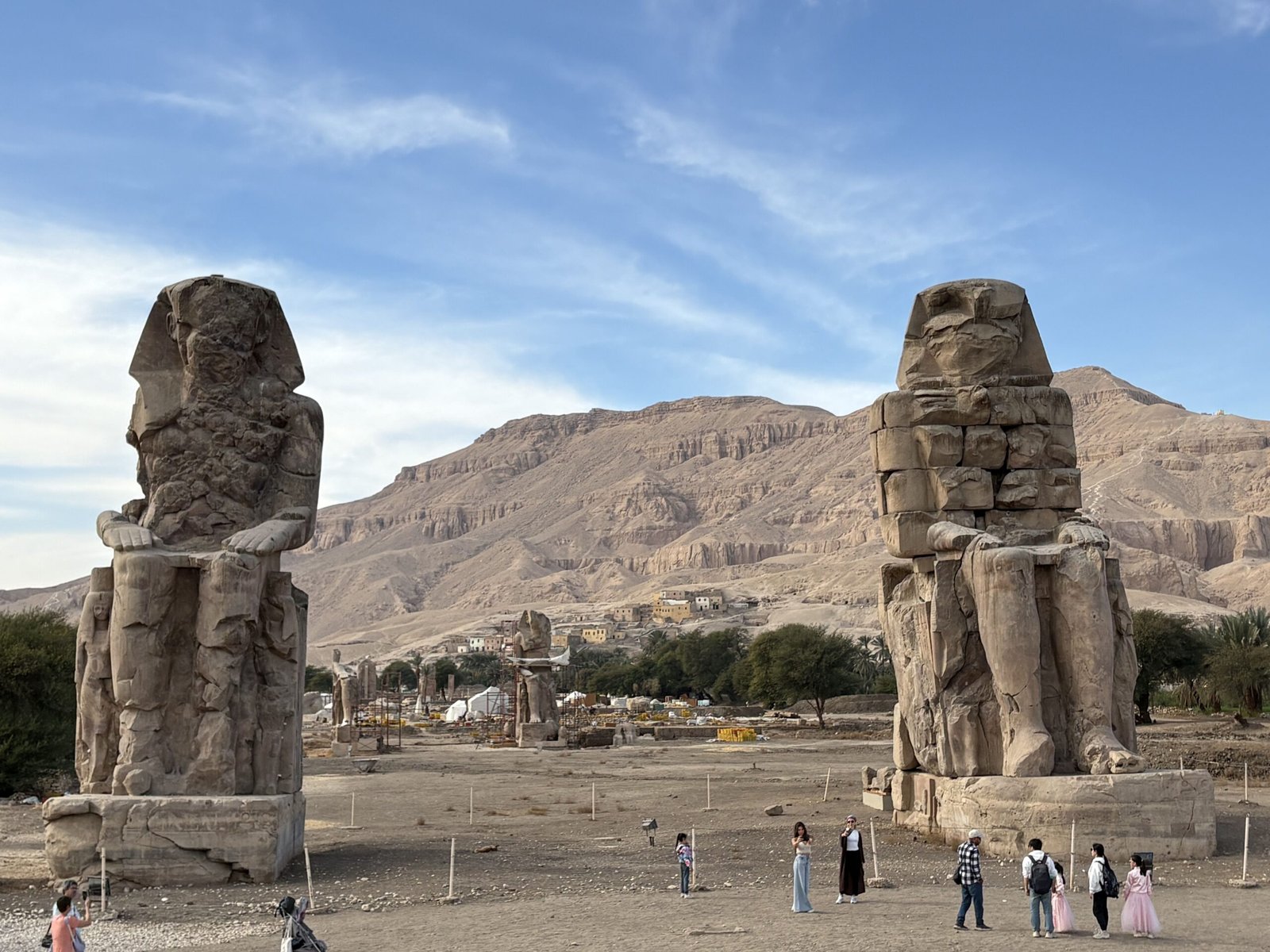
The two colossi are seated representations of Amenhotep III, a powerful ruler of Egypt’s Eighteenth Dynasty. Each figure is about 18 metres high when its monumental base is included. The king is shown seated on a throne in the traditional pose of an Egyptian ruler, with his hands resting on his knees and his gaze directed eastward.
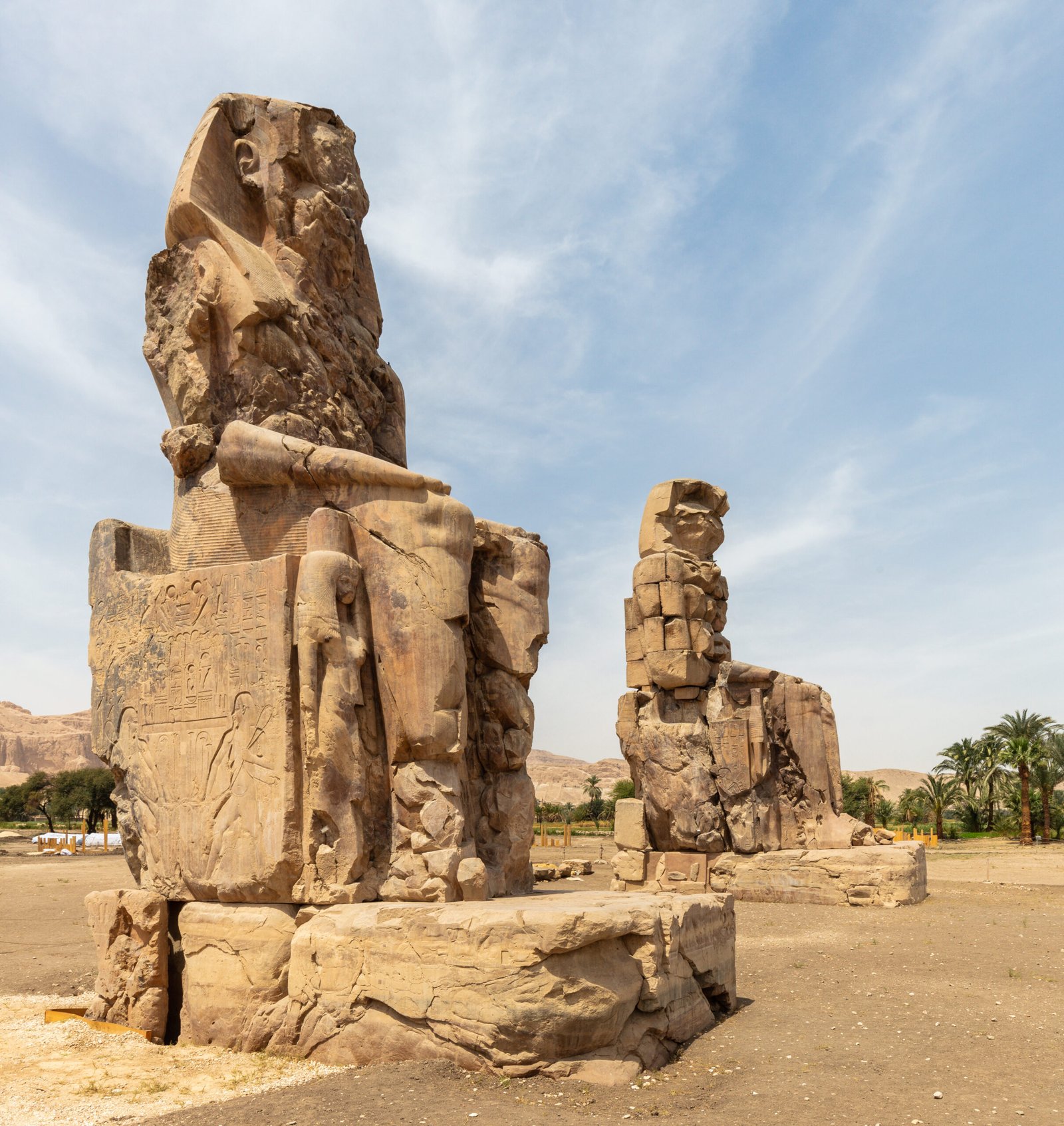
Smaller royal figures appear beside his legs, including Queen Tiye, Amenhotep III’s principal wife, and his mother Mutemwiya. The statues were carved from quartzite sandstone quarried at Gebel el-Ahmar near modern Cairo and transported south to Thebes, an extraordinary logistical achievement.
The Lost Mortuary Temple of Amenhotep III
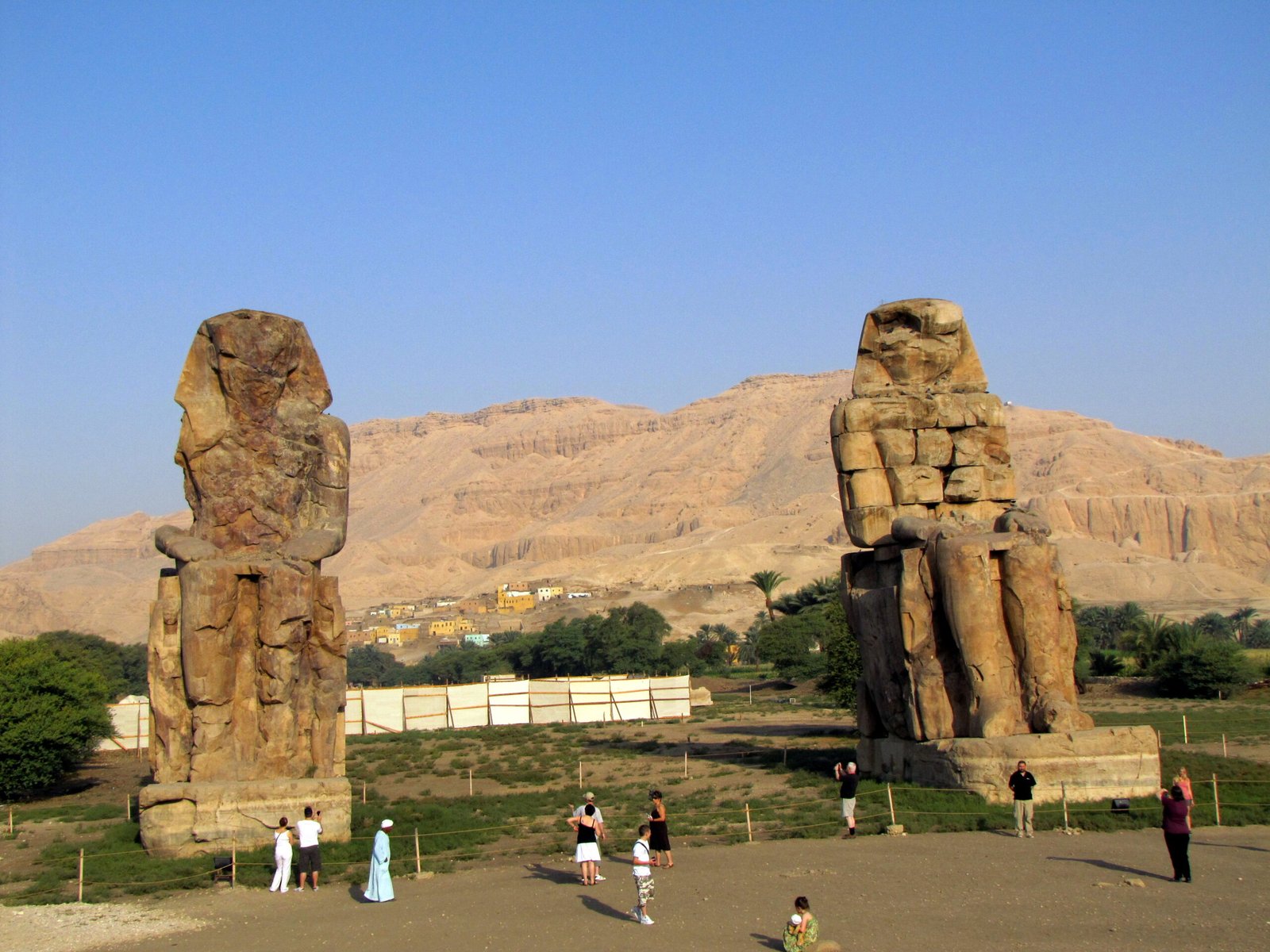
The colossi were never meant to stand alone. They formed part of the entrance to the enormous mortuary temple of Amenhotep III, a complex filled with courtyards, pylons, colossal sculpture, religious spaces, and monumental images of the king.
The temple stood close to the Nile floodplain, making it vulnerable to repeated flooding and long-term environmental damage. Later rulers and builders also reused stone from the complex. Over centuries, much of the temple collapsed, was dismantled, or disappeared beneath the changing landscape.
Yet the site is not empty. Archaeologists have uncovered foundations, fragments, statues, and architectural elements that show how vast the original complex was. The colossi are simply the most dramatic surviving monuments still standing in their original position.
Amenhotep III: The King Behind the Statues
Amenhotep III ruled for roughly four decades during the first half of the fourteenth century BCE. His reign is associated with political stability, prosperity, international diplomacy, and an exceptional period of artistic production.
He was a prolific builder, with major projects at Karnak and Luxor, the palace complex at Malqata, and numerous monumental statues. His principal wife, Queen Tiye, held an unusually prominent position in royal representation. Amenhotep III and Tiye were also the parents of Amenhotep IV, better known as Akhenaten.
Why Are They Called the Colossi of Memnon?
The statues were not originally called the Colossi of Memnon. The name emerged in the Greco-Roman period, when visitors associated the damaged northern colossus with Memnon, a legendary figure known from Greek tradition.
After an earthquake damaged the northern statue, ancient travelers reported hearing a strange sound around sunrise. The phenomenon became famous across the Roman world. Repairs carried out under Emperor Septimius Severus in the late second century CE appear to have silenced it, but the name Memnon remained attached to the statues.
Greek tradition connected Memnon with Ethiopia and the Trojan War, helping the story travel widely through the ancient Mediterranean.
Modern explanations focus on physical conditions affecting the damaged stone, including temperature, moisture, and the changing conditions around dawn. The story is therefore best understood as a remarkable ancient travel tradition surrounding a real acoustic phenomenon, rather than evidence of a supernatural voice.
The Colossi and Ancient Thebes
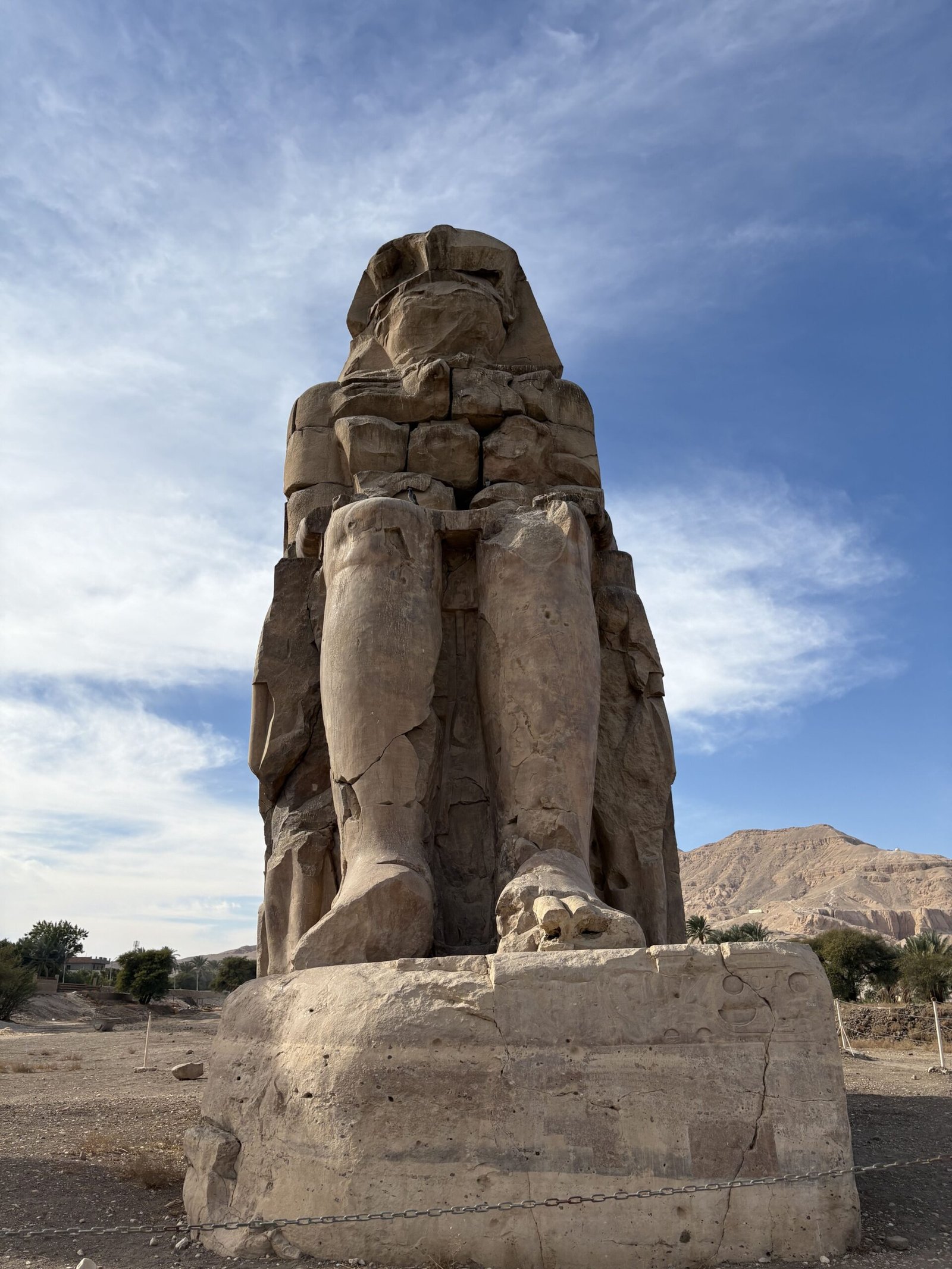
The colossi also help explain why the west bank of Luxor matters beyond individual monuments. They belonged to the sacred landscape of ancient Thebes, where royal temples, tombs, processional routes, and desert cliffs formed a connected religious world.
Standing before the statues today gives only a glimpse of their original setting. In Amenhotep III’s time, visitors would have approached a vast ceremonial landscape filled with monumental sculpture and architecture.
The colossi communicated royal presence on an enormous scale. They were part of a religious and political environment in which the pharaoh was presented as a divinely sanctioned ruler whose monuments could endure beyond his lifetime.
Their position on the west bank was also meaningful. The Theban necropolis was closely associated with royal mortuary cults, the world of the dead, and the setting sun. The temple formed part of a much larger sacred landscape that included royal tombs, temples, and desert cliffs.
What Happened to the Temple?
The disappearance of Amenhotep III’s mortuary temple shows how dramatically monumental landscapes can change. Flooding, structural deterioration, earthquakes, stone reuse, and centuries of rebuilding all contributed to the destruction of the complex.
Some elements were moved or reused elsewhere, while others remained buried. Archaeological excavation continues to recover evidence of the original temple, making the site an important source for understanding Amenhotep III’s building programme.
Visiting the Colossi of Memnon in Luxor
The Colossi of Memnon stand on Luxor’s west bank, close to the road connecting the major archaeological sites of the Theban necropolis. They are commonly visited on the way to the Valley of the Kings and the Temple of Hatshepsut.
The statues are in an open area with little natural shade, so early morning is particularly pleasant. Sunrise also creates beautiful light across the figures and the Theban hills behind them.
For most travelers, the stop is relatively short, often around 15–30 minutes. Even so, it is worth looking closely at the scale of the stone, the surviving throne details, the smaller royal figures at the king’s legs, and the damaged surface of the northern colossus.
If you are planning a full west-bank day, the colossi work especially well as an early stop before continuing toward the Temple of Hatshepsut and Valley of the Kings.
There is no separate entrance ticket simply to view the two statues from the surrounding area. Local access arrangements can change, so visitors should confirm current conditions when planning a wider west-bank visit.
For accommodation, compare Luxor Hotels or consider Villas & Apartments in Luxor for a more private stay.
Why the Colossi of Memnon Still Matter
The Colossi of Memnon are powerful because they are survivors. They once belonged to a temple complex far larger than anything visible today, yet the two statues still dominate the plain.
They connect several layers of history in one place: the royal ambitions of Amenhotep III, the religious world of New Kingdom Thebes, the destruction of ancient monuments, Roman restoration, and the fascination of Greek and Roman travelers with Egypt.
For a modern visitor, the colossi are more than a quick photograph. They are a reminder that the monuments of Luxor were once part of an enormous living landscape—and that what survives today is only a fragment of ancient Thebes.
Frequently Asked Questions About the Colossi of Memnon
Who do the Colossi of Memnon represent?
They represent Pharaoh Amenhotep III, shown seated on a throne in the traditional royal pose.
How tall are the Colossi of Memnon?
Each colossus stands about 18 metres high when its monumental base is included.
Why are they called Memnon?
Greek and Roman tradition connected the damaged northern statue with the mythical Memnon after visitors reported hearing a sound around dawn.
Did the statues really sing?
Ancient visitors reported a sound from the northern statue after earthquake damage. Roman repairs later stopped the phenomenon, while modern explanations focus on physical conditions affecting the cracked stone.
What happened to Amenhotep III’s temple?
Much of the temple was destroyed by flooding, deterioration, earthquakes, stone reuse, and later construction. Excavations have recovered important remains.
Can I visit the Colossi of Memnon?
Yes. They are one of the best-known stops on Luxor’s west bank and are commonly combined with other Theban sites.
How long should I spend there?
A typical stop lasts about 15–30 minutes, although photographers and archaeology enthusiasts may want longer.
PREMIUM BOOKING
Plan Your Egypt Journey
From comfortable hotels and private stays to unforgettable Luxor experiences, start planning your Egypt adventure.
Egypt Hotels
Stay in carefully selected hotels across Egypt, from major cities to historic destinations.
Luxor Hotels
Find comfortable stays close to Luxor’s temples, museums and the Nile.
Villas & Apartments in Luxor
Choose a more private stay for your Luxor visit.
Pingback: Medinet Habu: The Mortuary Temple of Ramesses III - egyptsaga.com