Ancient Egypt • New Kingdom • Luxor West Bank
The Ramesseum: Mortuary Temple of Ramesses II
Explore the ruined royal temple where a fallen colossus, monumental courts and carved battle scenes preserve the ambition of one of Egypt’s most famous pharaohs.
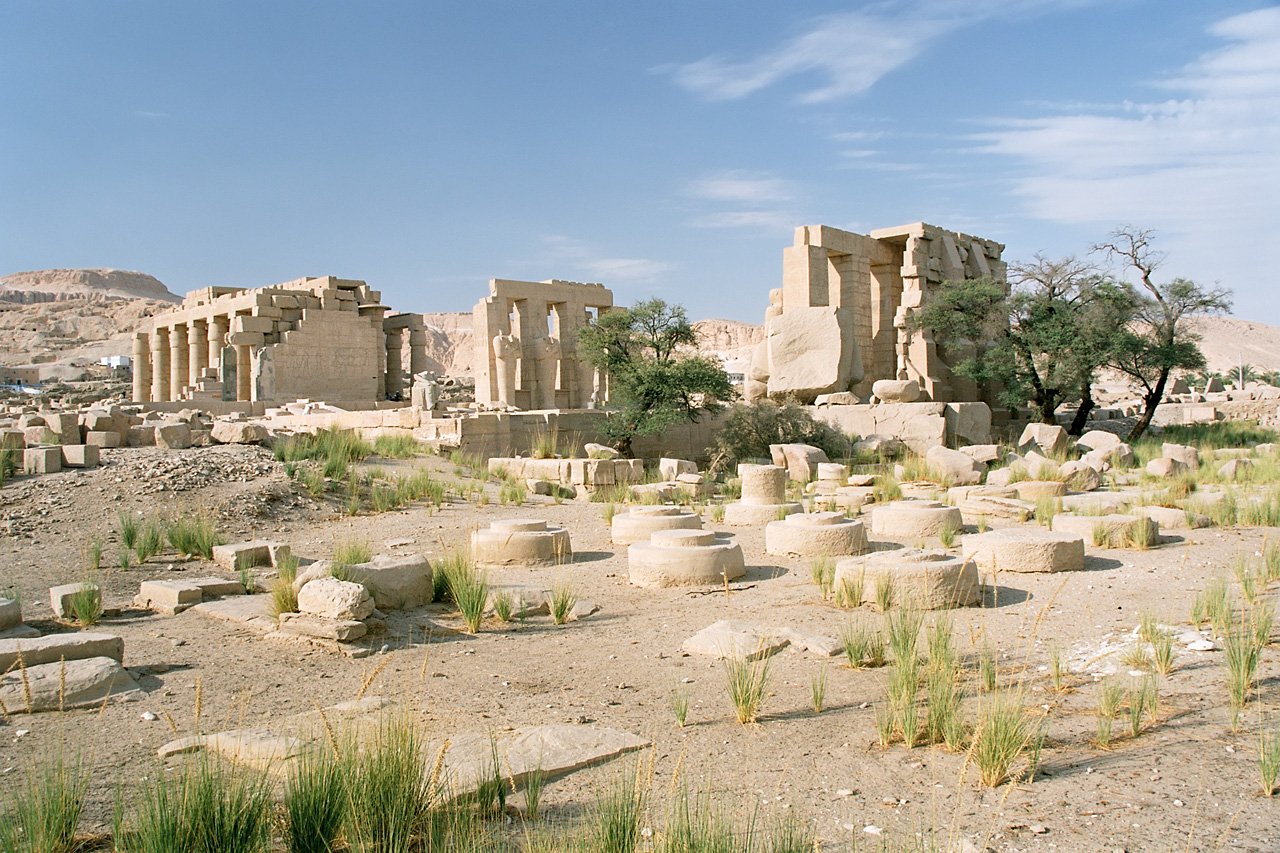
On Luxor’s west bank, where cultivated fields give way to the desert and the cliffs of ancient Thebes, the Ramesseum stands in fragments. Its fallen statues and broken columns may look like the remains of a lost world, yet they still reveal the scale of Ramesses II’s ambition—and the religious purpose behind one of his most important monuments.
Built during the reign of Ramesses II, the Ramesseum was not simply a temple commemorating a successful king. It was a mortuary temple, part of a sacred landscape designed to support the king’s cult after death and to maintain his relationship with the gods for eternity. The complex was associated especially with Amun and with the deified king himself.
Ramesses II ruled for roughly 66 years, and his building programme stretched across Egypt. He added to established religious centers, commissioned colossal statues and created monuments that presented him as a ruler favored by the gods. The Ramesseum was his great memorial temple at Thebes, a place where his name, images and religious role could endure beyond his lifetime.
Today, the Ramesseum receives fewer visitors than the Valley of the Kings or the Temple of Hatshepsut. That quieter atmosphere is part of its appeal: you can take time to study the surviving reliefs, trace the original layout and imagine how the temple once worked as a place of ritual, royal memory and daily activity.
Why Did Ramesses II Build the Ramesseum?
In ancient Egypt, a king’s mortuary temple helped preserve the rituals and offerings believed to sustain his existence beyond death. Priests performed ceremonies, presented offerings and honored the king in a religious setting closely connected with the major gods. These temples also expressed royal authority in the landscape: their pylons, courts and statues made kingship visible to anyone approaching the western edge of Thebes.
The temple’s ancient name is often translated as a “house of millions of years,” a phrase that captures the intended permanence of royal worship. The stone has weathered and parts of the complex have collapsed, but the surviving remains still communicate the original message: the king’s place in the religious order was meant to last.
Walking Through the Temple Layout
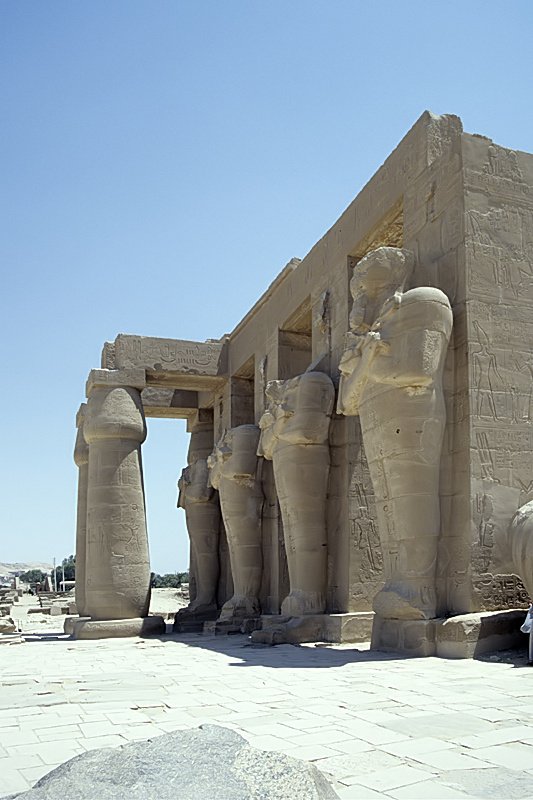
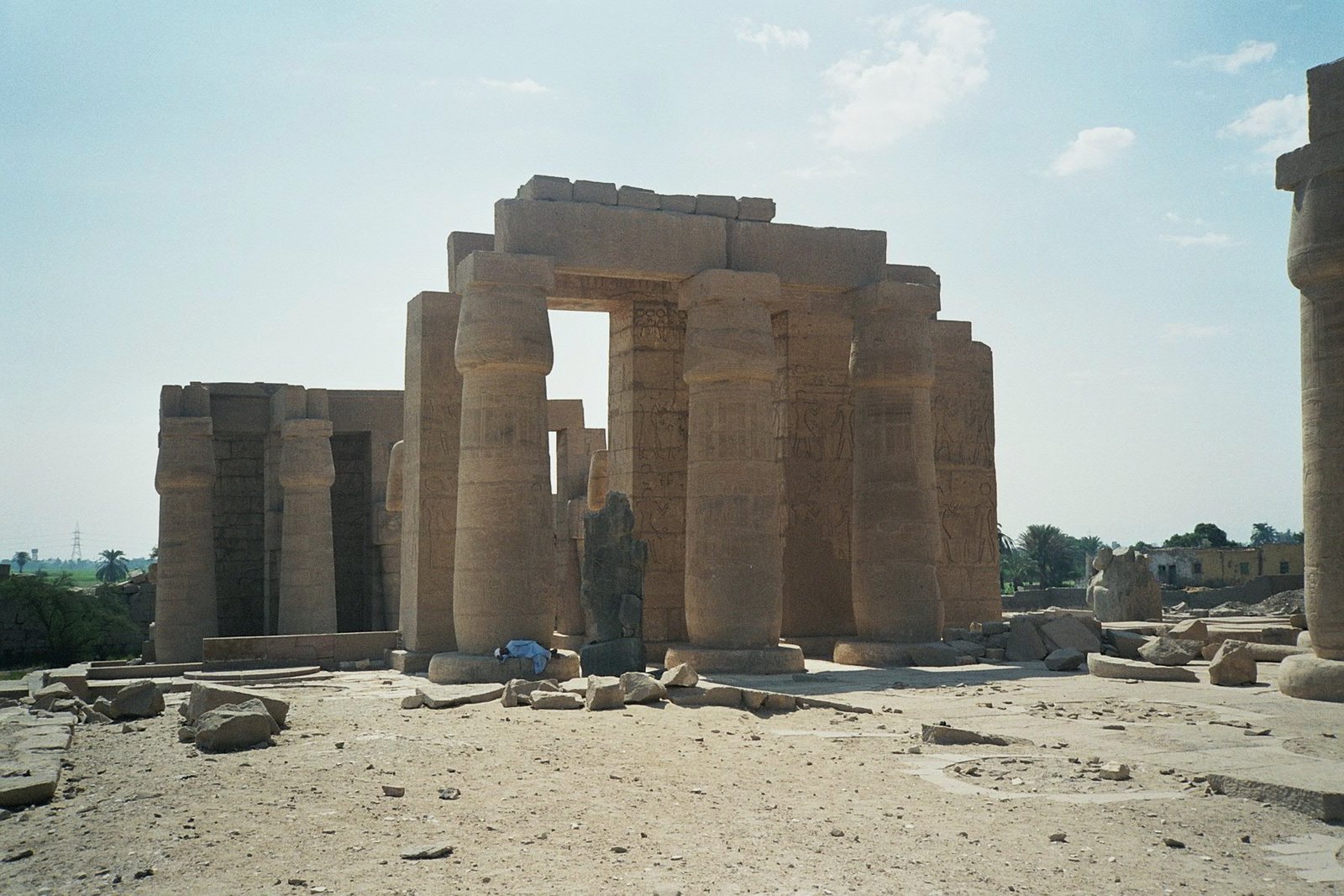
The Ramesseum was arranged along a main axis, with monumental gateways leading into open courts and then toward more enclosed sacred spaces. In its original form, visitors passed through pylons and courtyards before reaching columned halls and the inner sanctuary. This sequence moved people from the open, public-facing areas toward spaces associated with more restricted rituals.
Much of the structure was damaged over centuries, and stone was removed for reuse in later buildings. Even so, the plan can still be read in the surviving foundations, columns, wall fragments and scattered architectural blocks. What appears today to be a field of ruins was once a carefully organized religious complex.
The Fallen Colossus: The Statue Behind the Legend
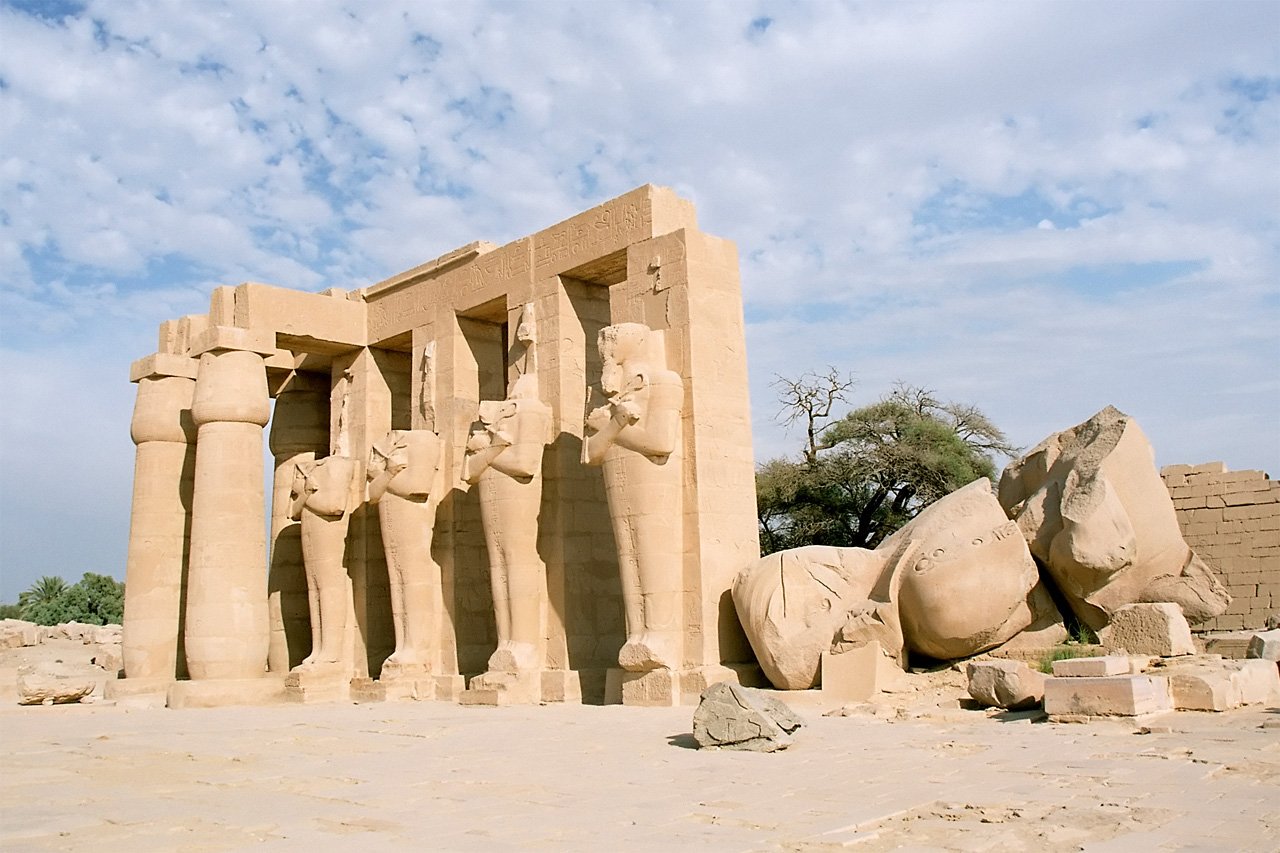
The Ramesseum’s most famous surviving feature is the broken colossus of Ramesses II, once part of a monumental seated statue that stood near the temple’s entrance courts. The fragments give a sense of the extraordinary scale of royal sculpture in the New Kingdom. What remains on the ground is only part of a statue that once dominated the approach to the temple.
A major portion of the colossus, known as the “Younger Memnon,” was transported to Britain in the nineteenth century and is now in the British Museum. The statue’s journey from Thebes to London helped make the Ramesseum famous among European travelers, artists and writers. Its association with Percy Bysshe Shelley’s poem “Ozymandias” is part of the monument’s modern story, although the poem’s inspiration came through accounts and descriptions of Ramesses II’s statue rather than a literal depiction of the broken remains seen today.
The poem’s message about the fragility of power feels especially resonant here. Ramesses II built to be remembered, and his name still appears across Egypt. Yet the shattered colossus also shows what time, natural forces and the reuse of stone can do to even the most ambitious royal project.
Battle Reliefs and Royal Propaganda
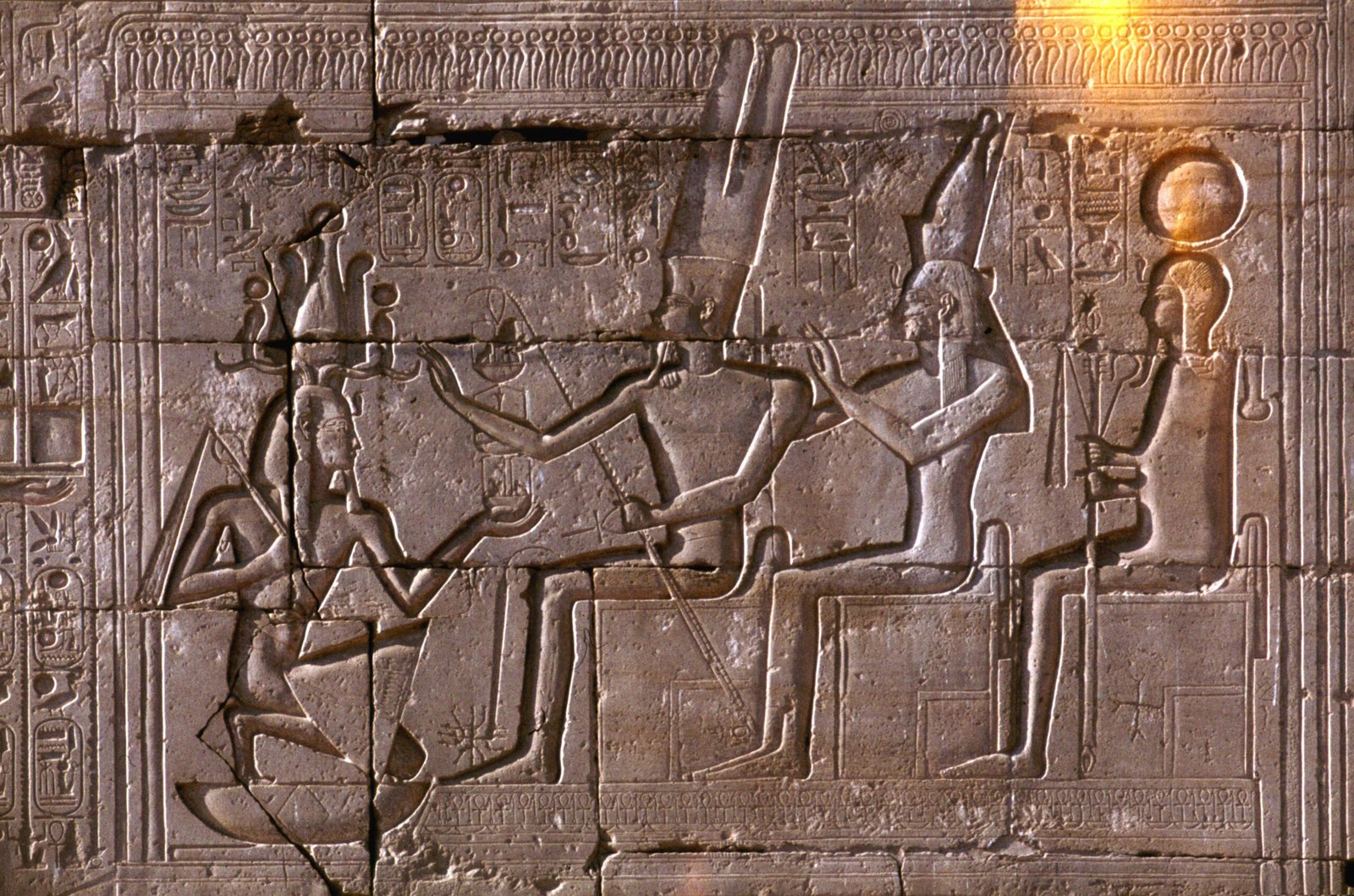
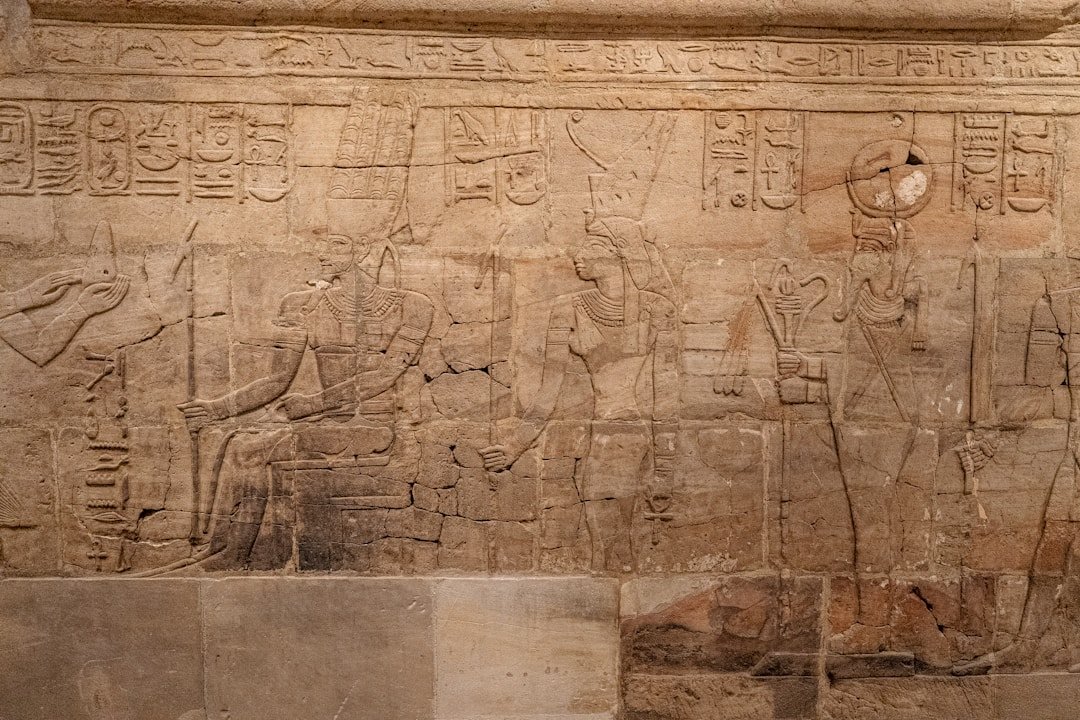
The Ramesseum’s walls once carried extensive carved scenes connecting the king with the gods and recording his military achievements. Among the most notable subjects are scenes associated with the Battle of Kadesh, the famous confrontation between Egypt and the Hittite kingdom during Ramesses II’s reign.
Egyptian royal inscriptions present Kadesh as a heroic episode in which the king stood firm in the face of danger. Historians generally treat the battle as inconclusive rather than a straightforward Egyptian victory: the Hittites retained Kadesh, and Egypt and the Hittite kingdom later reached a peace agreement. The reliefs remain valuable because they show how the pharaoh wanted his campaigns to be remembered.
These images were part of a royal and religious programme, presenting the king as a defender of Egypt and an agent of divine order. At the Ramesseum, architecture and relief worked together: the scale of the buildings established the setting, while carved scenes gave the king’s public image a narrative.
More Than a Monument: A Working Temple Complex
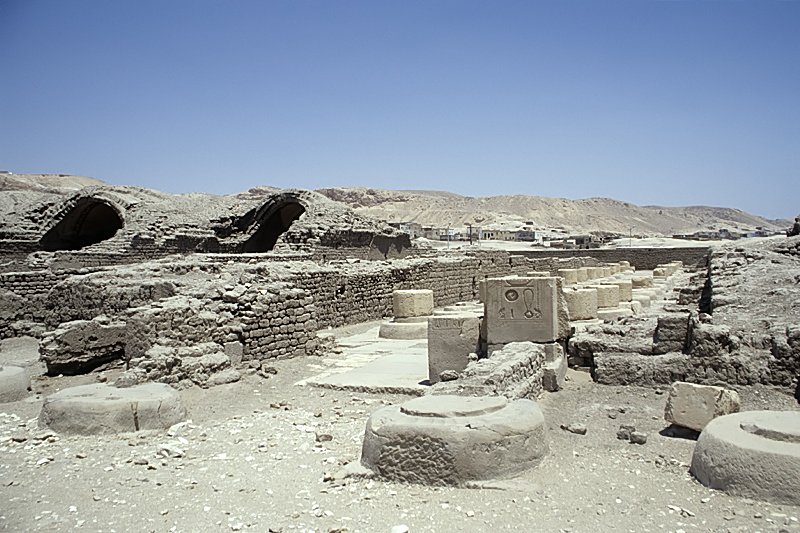
A mortuary temple was not used only for occasional royal ceremonies. Such complexes required priests, administrators, craftspeople and supplies. Storerooms and subsidiary buildings supported the rituals and the economic life connected with the institution. The Ramesseum included structures beyond its main ceremonial axis, reminding us that a great temple was also a working organization.
The wider west-bank landscape included royal tombs, other mortuary temples, settlements and routes used by people who served royal and religious institutions. A visit becomes more meaningful when the Ramesseum is understood as one part of a connected landscape rather than an isolated ruin.
What Happened to the Ramesseum?
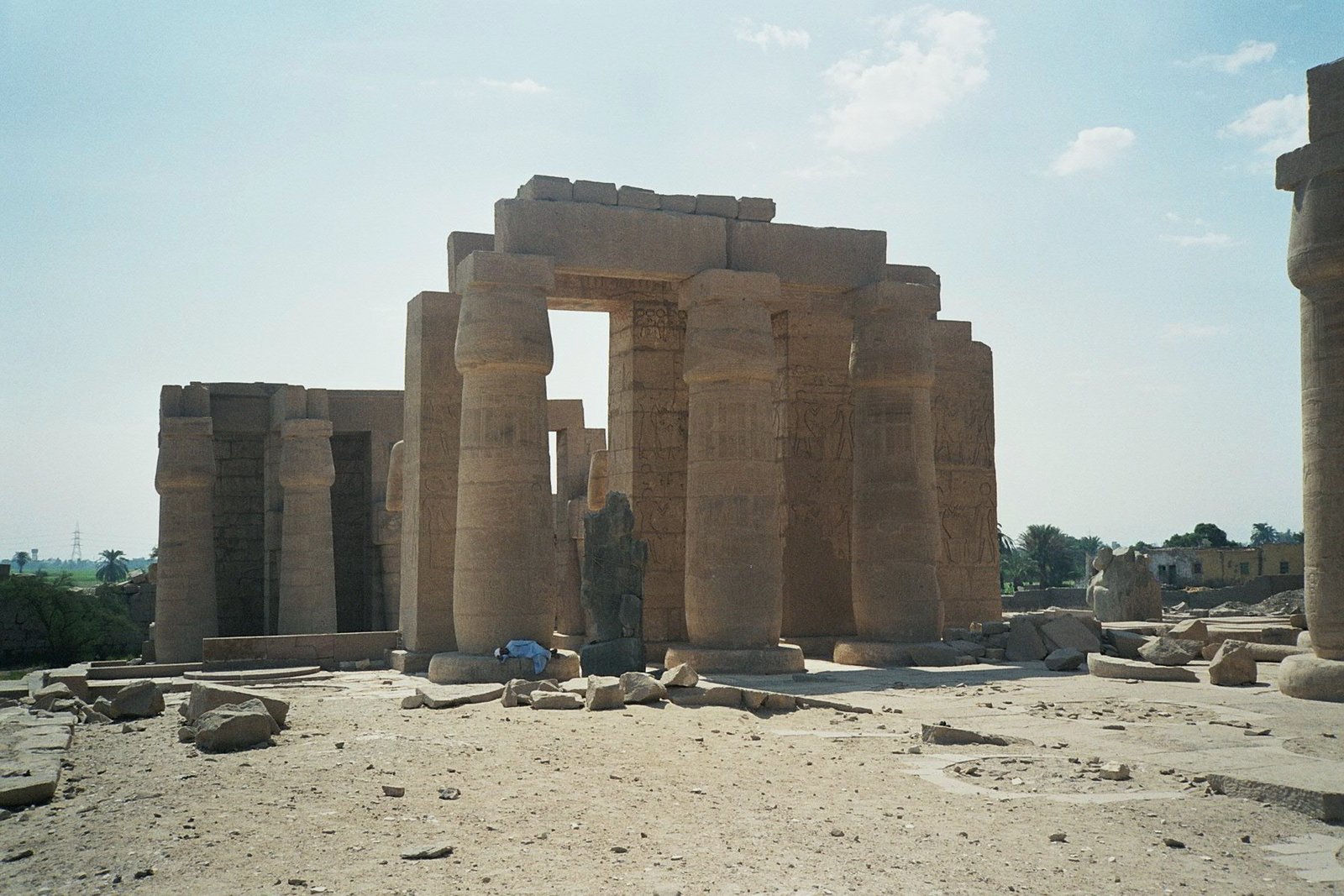
After the New Kingdom, the temple’s original role gradually changed. Some parts fell into ruin, while stone from the complex was quarried and reused in later construction. Natural forces also contributed to the loss of walls and statues. The present site is therefore a combination of surviving architecture, fallen fragments and traces of the original plan.
Travelers and scholars recorded the ruins over the centuries, and archaeological work helped clarify the layout and meaning of the surviving decoration. Today, the site continues to offer evidence for the study of New Kingdom religion, royal representation and the long history of ancient monuments after their original use ended.
Visiting the Ramesseum in Luxor
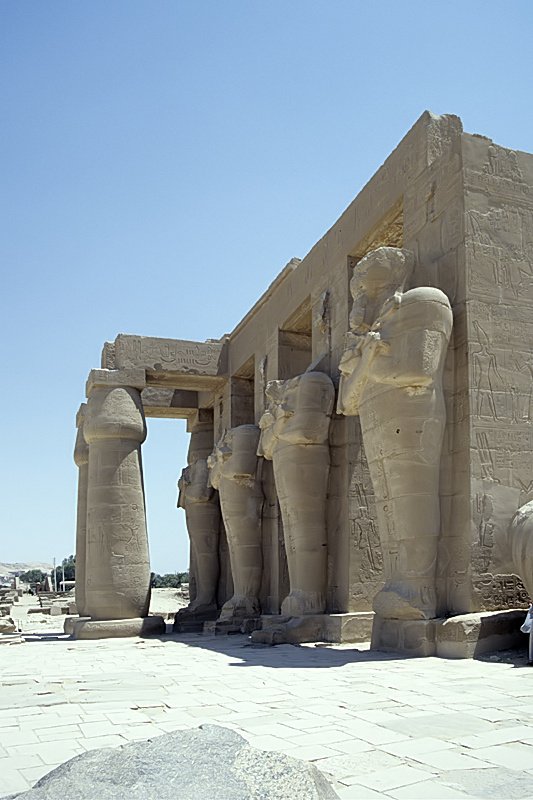
The Ramesseum lies on the west bank of Luxor, within reach of other major sites in the Theban Necropolis. It is often combined with Medinet Habu, the Colossi of Memnon and other west-bank monuments. Depending on your interests and schedule, you can also pair it with the Valley of the Kings or Deir el-Bahari.
For many visitors, allow around one to one and a half hours to walk through the main area, study the fallen colossus and examine the remaining reliefs. History enthusiasts and photographers may want longer, especially if they like to look closely at architectural details rather than move quickly between sites.
When to go
Early morning is generally more comfortable in Luxor, particularly in warmer months. The site has limited natural shade, so bring water, sun protection and comfortable walking shoes. Opening hours and ticket prices can change, so confirm current details locally or through official Egyptian tourism channels before your visit.
What to look for
Start by observing the overall axis and remains of the courts. Then look at the fallen colossus and the scale of the surviving architectural fragments. Finally, spend time with the carved walls: the figures and inscriptions are easier to appreciate when you consider them as part of a larger royal story.
Should you hire a guide?
A knowledgeable local guide can explain the difference between a mortuary temple and a royal tomb, identify scenes on the walls and connect the Ramesseum with the wider history of Ramesses II. If you are exploring several west-bank sites in one day, a guide can also help organize the route and give each monument its own context.
Why the Ramesseum Still Matters
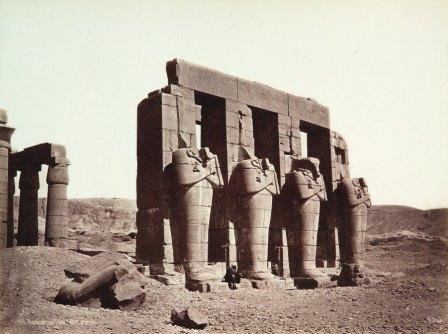
The Ramesseum preserves two sides of Ramesses II’s legacy. Its scale and decoration reflect the power of a king who wanted his reign to be remembered for generations. Its broken statues and weathered walls also show that monuments do not remain untouched by time, however carefully their builders planned for eternity.
For travelers, the Ramesseum offers something different from Egypt’s most complete and crowded temples. It rewards curiosity, close observation and imagination. The fallen colossus is unforgettable, but the wider complex is equally important: it reveals how architecture, ritual, politics and royal memory came together in ancient Thebes.
If Karnak shows the scale of Thebes at its height, the Ramesseum offers a quieter encounter with the ambition of one king—and with the centuries that followed him.
Frequently Asked Questions
Who built the Ramesseum?
Ramesses II commissioned the Ramesseum as his mortuary temple on the west bank of ancient Thebes, modern Luxor, during the New Kingdom’s 19th Dynasty.
What was the Ramesseum used for?
It supported the religious cult of the deceased king and honored Amun and Ramesses II through offerings, rituals and ceremonies. The wider complex also needed storerooms and facilities to support its daily work.
What is the fallen statue at the Ramesseum?
It is the remains of a colossal seated statue of Ramesses II that once stood in the temple’s entrance area. A major portion known as the Younger Memnon is now in the British Museum.
Did the Ramesseum inspire “Ozymandias”?
The poem is associated with the famous colossal statue and the name Ozymandias, the Greek form linked to Ramesses II. The Ramesseum’s statue and descriptions contributed to the monument’s European reputation, but the poem should not be treated as a literal description of the broken colossus at the site.
How long should I spend at the Ramesseum?
About one to one and a half hours is enough for many visitors. History enthusiasts and photographers may prefer to allow more time.
Can I visit the Ramesseum with other Luxor sites?
Yes. It can be combined with Medinet Habu, the Colossi of Memnon, the Valley of the Kings or Deir el-Bahari, depending on your schedule.
What should I bring?
Bring water, sun protection and comfortable shoes. There is little shade, and conditions can be hot, especially in summer. Check current opening times and ticket details before setting out.
PREMIUM BOOKING
Plan Your Egypt Journey
Find a comfortable base in Luxor, explore ancient sites with a local guide and add memorable experiences to your journey through Egypt.
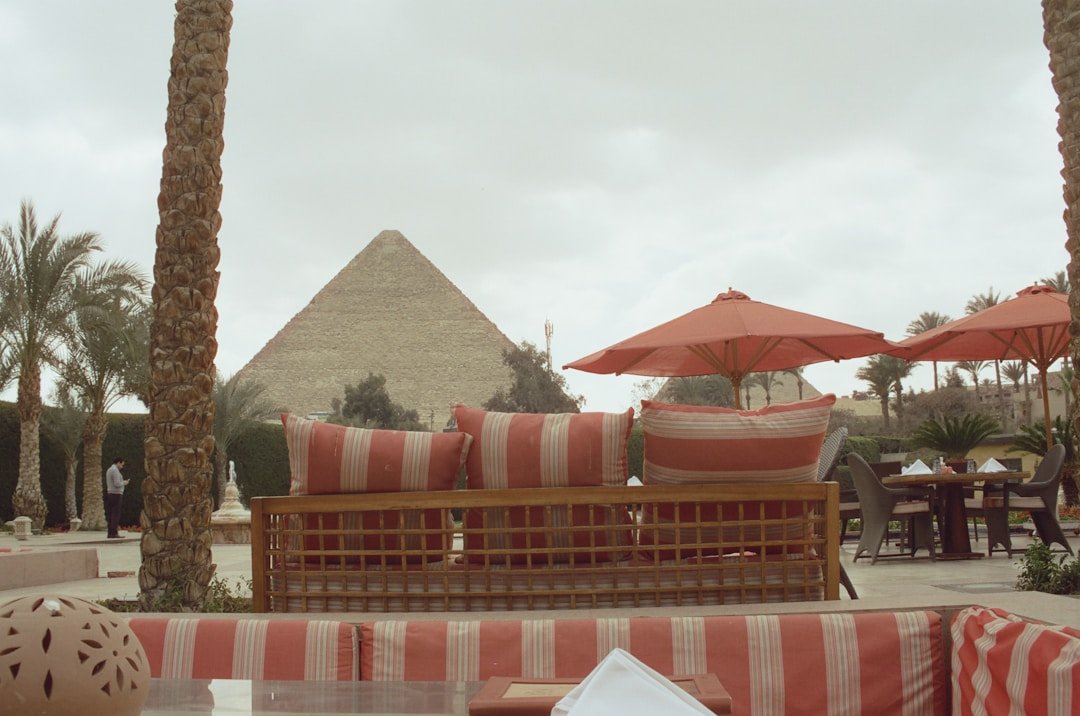
Egypt Hotels
Find hotels across Egypt, from historic cities to famous travel destinations.
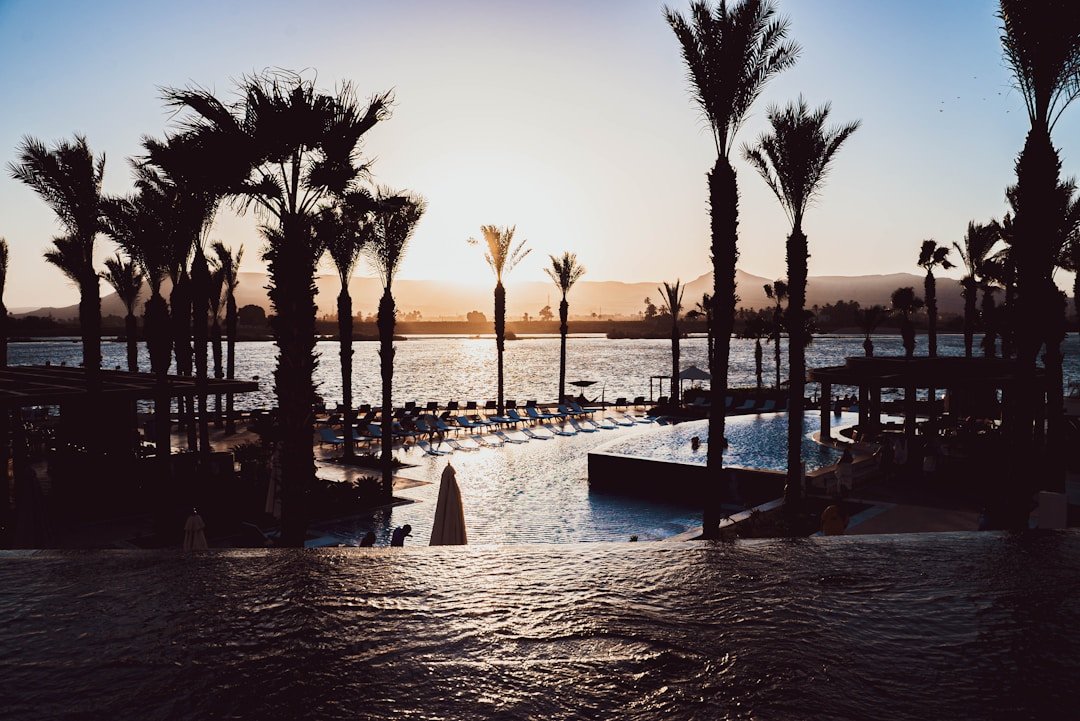
Luxor Hotels
Stay near the Nile, Luxor Temple and the routes leading to west-bank monuments.
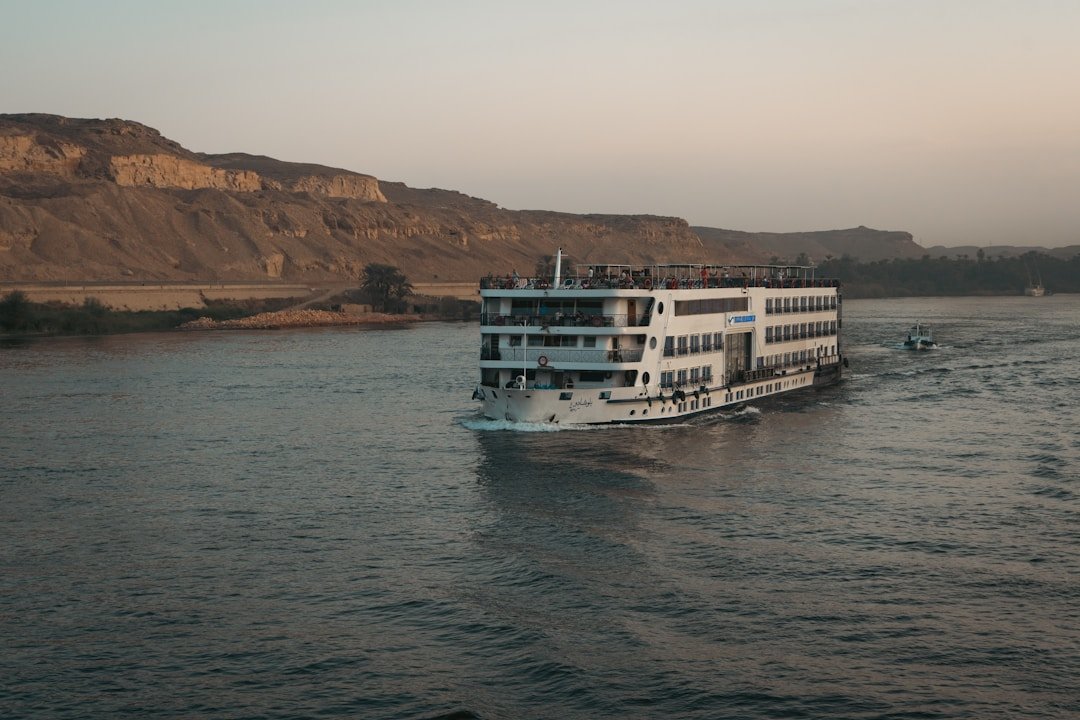
Nile Cruises
Connect Luxor and Aswan with a journey along the river that shaped ancient Egyptian life.
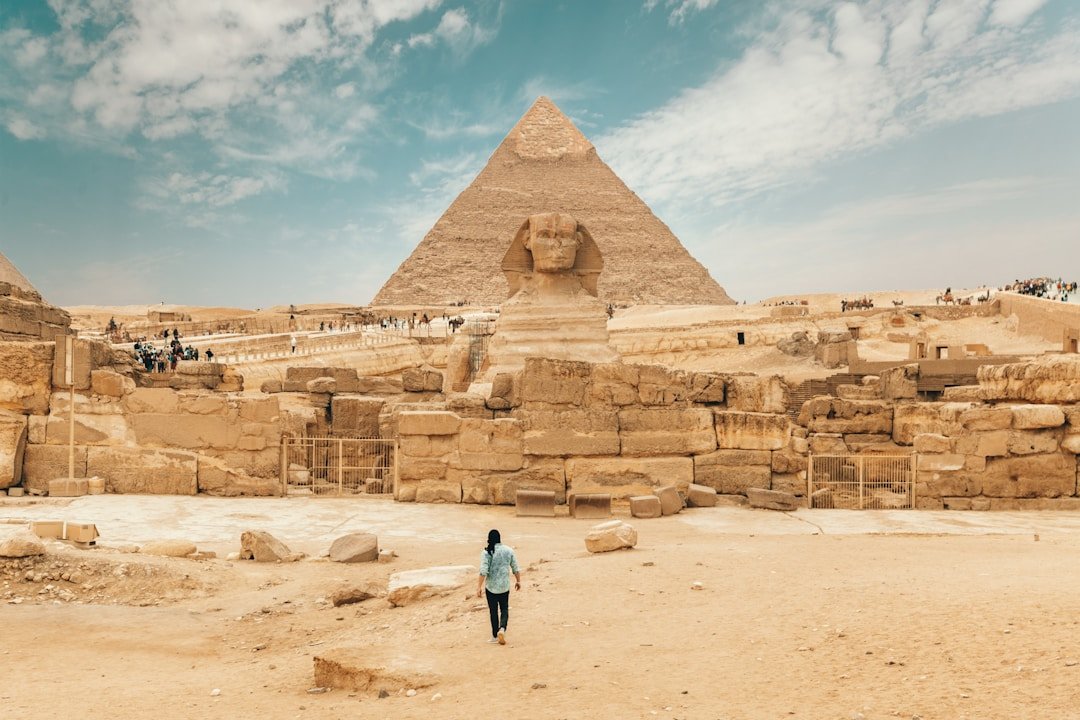
Egypt Tours
Plan guided visits to Egypt’s iconic monuments, historic cities and archaeological sites.
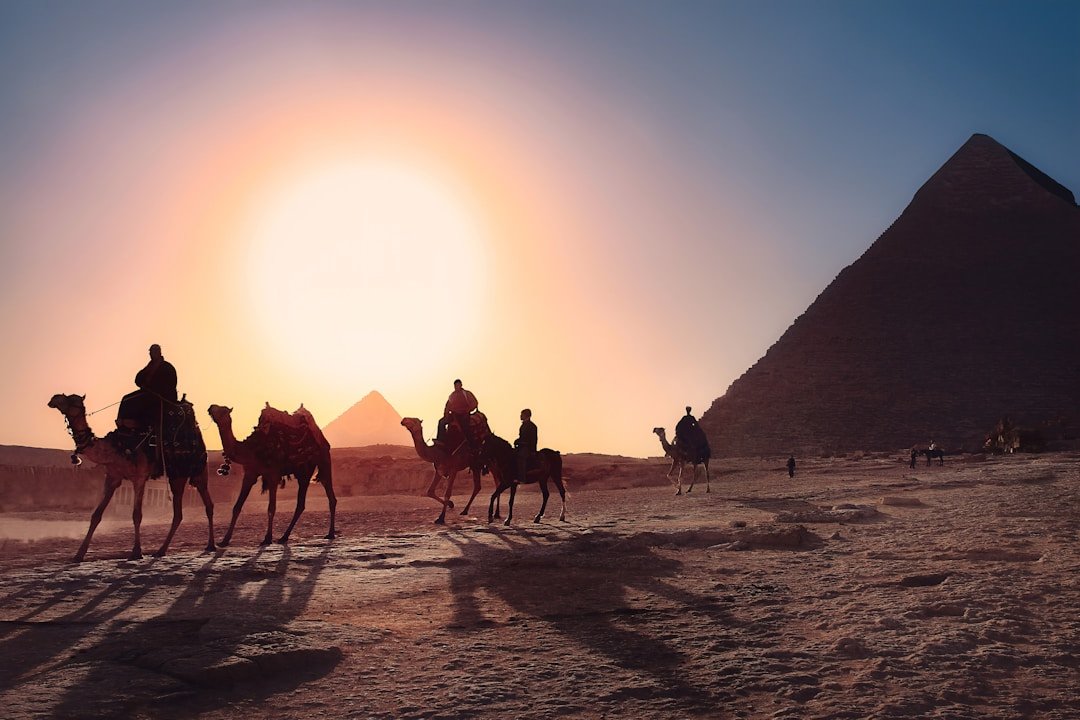
Private Egypt Tours
Enjoy a flexible itinerary shaped around your interests, pace and travel plans.
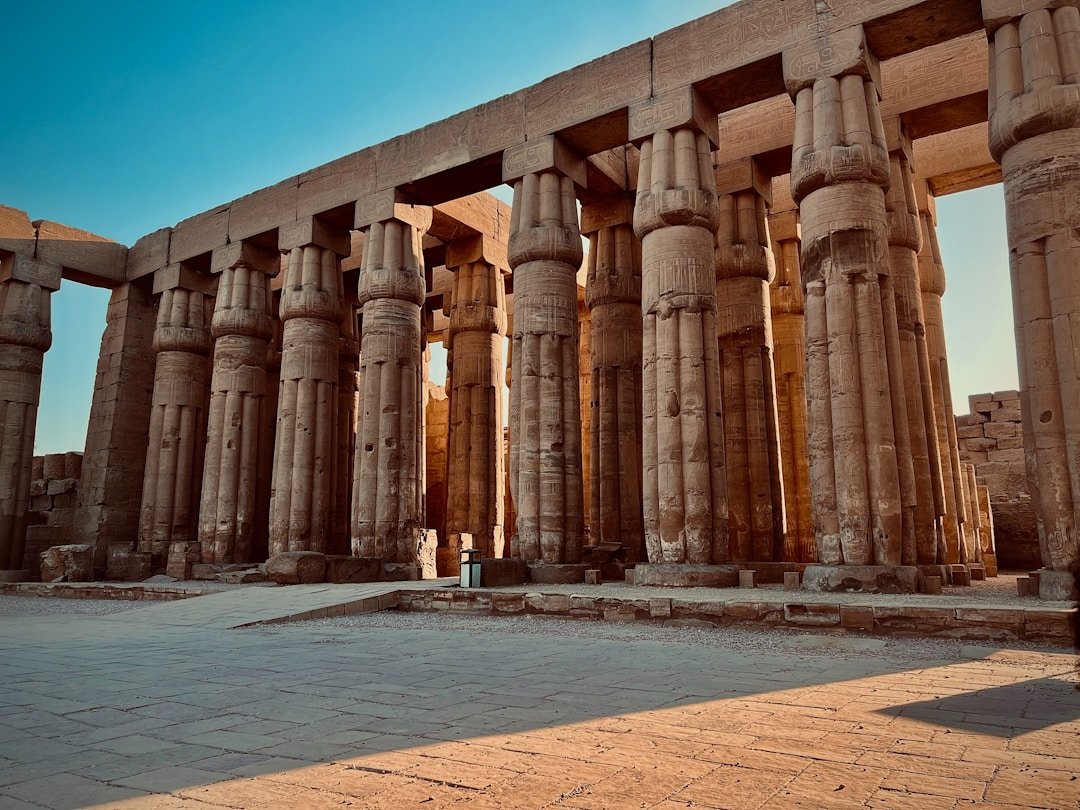
Luxor Tours
Explore the temples, tombs and archaeological landscapes of Luxor with a planned route.
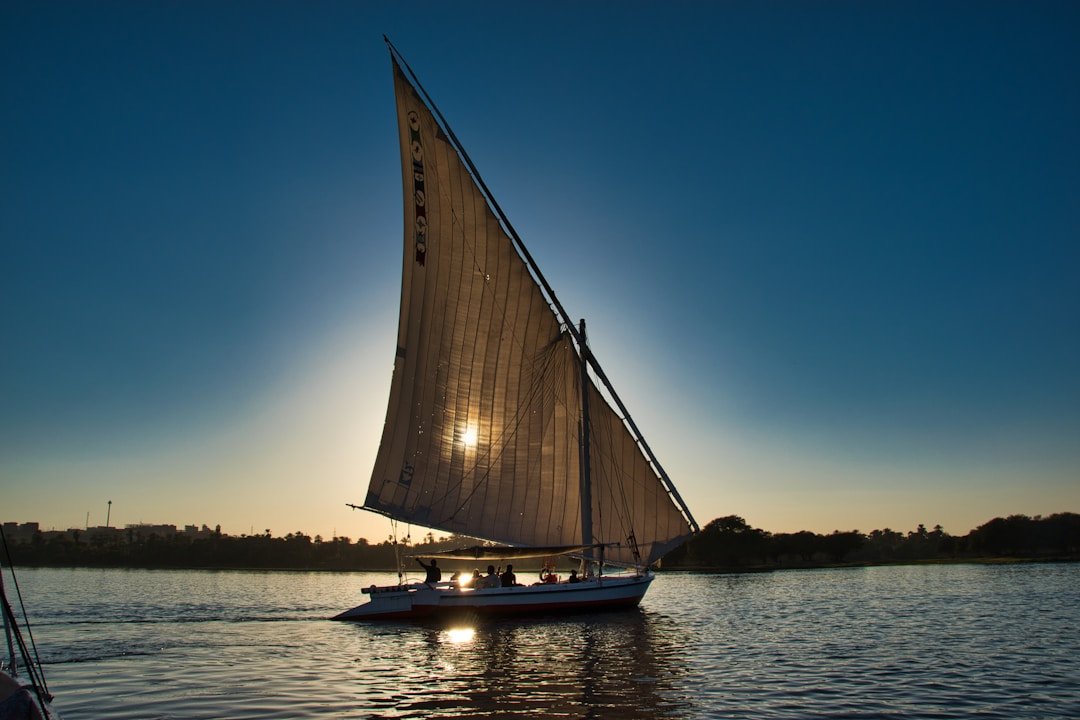
Egypt Travel Experiences
Add memorable local activities and cultural experiences beyond the major monuments.
Local Egypt Guides
Understand the stories behind reliefs and monuments with help from a local guide.
Hot Air Balloon Luxor
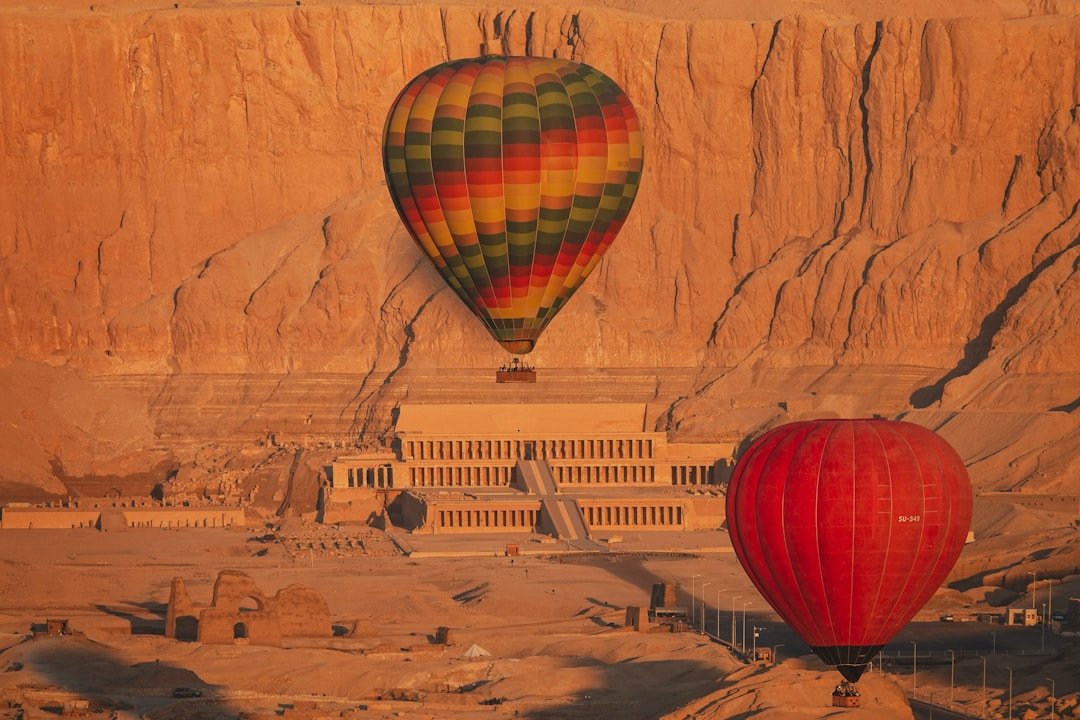
See the ancient landscape of Luxor from above on a sunrise balloon flight.
Villas & Apartments in Luxor
Choose a private apartment or villa for a relaxed stay and extra space.