Abu Simbel: Ramesses II’s Temples on the Edge of Nubia
Far south of Aswan, where the Nile Valley narrows toward Nubia, two temples emerge from the desert like a memory carved into the mountain. Abu Simbel was built for Ramesses II in the 19th Dynasty, but its story is larger than the reign of one pharaoh. It is a story of royal power, devotion, engineering and one of the most remarkable archaeological rescue projects ever attempted.
About 290 km south of Aswan.
Dedicated to Ramesses II and associated with Amun-Ra, Ra-Horakhty and Ptah.
Sunlight reaches the sanctuary on 22 February and 22 October.
The Great Temple of Ramesses II
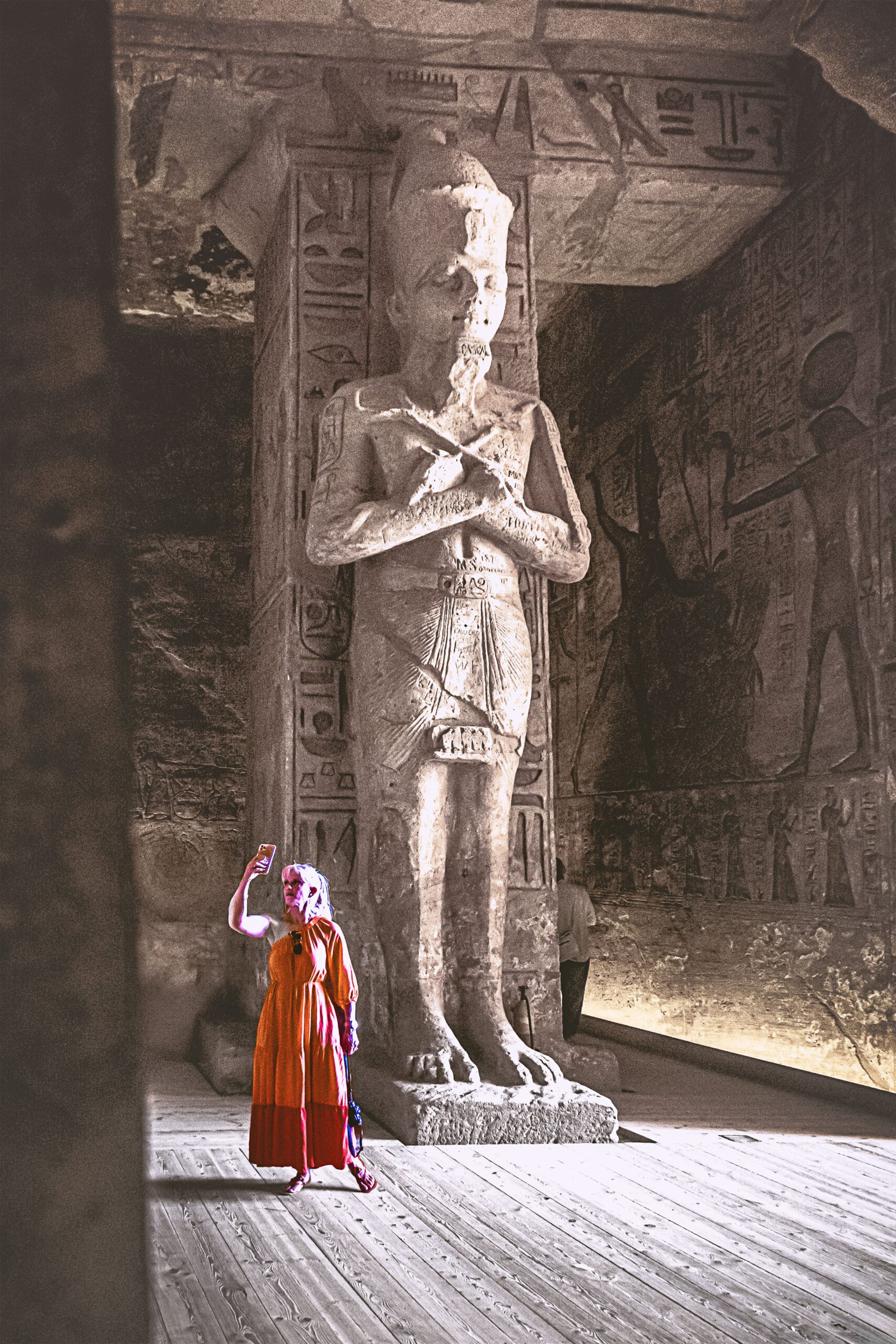
The Great Temple was cut directly into the living rock during the reign of Ramesses II, around the 13th century BC. Its façade is dominated by four colossal seated images of the king. One was damaged and collapsed after an ancient earthquake, but the remaining figures still create one of the most dramatic approaches in Egypt.
Inside, the monument moves from monumental public spaces toward a deeply sacred sanctuary. Reliefs celebrate Ramesses as king and warrior, while the innermost area connects him with the gods. The architecture was not accidental: the long axis of the temple was designed around light, ritual and royal symbolism.
The Abu Simbel Sun Alignment
Twice each year, on 22 February and 22 October, sunlight travels deep into the temple and illuminates the statues at the sanctuary. The phenomenon is one of Abu Simbel’s most memorable architectural features and is a reminder that ancient Egyptian temple design could combine astronomy, ritual and architecture with extraordinary precision.
The Small Temple of Nefertari

Nearby stands the smaller temple dedicated to the goddess Hathor and Queen Nefertari, one of Ramesses II’s principal wives. Its façade is unusual because the colossal figures of Nefertari are represented at nearly the same scale as those of the king. The monument gives visitors a different view of royal imagery and the role of queens within the sacred landscape.
The Rescue and Relocation of Abu Simbel
Abu Simbel did not always stand where visitors see it today. Construction of the Aswan High Dam threatened the temples with submersion as Lake Nasser rose. An international campaign led under UNESCO resulted in the temples being carefully dismantled, moved and reconstructed on higher ground. The rescue was completed in 1968.
The relocation is part of what makes Abu Simbel extraordinary today: the monument is ancient, but the landscape around it also records a modern chapter in the history of archaeological conservation. Abu Simbel and other Nubian monuments were later inscribed on the UNESCO World Heritage List in 1979.
Visiting Abu Simbel

Most visitors reach Abu Simbel from Aswan, either on an organized day trip or by arranging transport independently. The journey is long, so an early start is normally the most practical way to experience both temples without rushing.
Planning a trip from Aswan?
Give yourself enough time for the road, security procedures and a proper visit to both temples. If Abu Simbel is part of a wider Egypt itinerary, compare accommodation and travel experiences before you leave Aswan.
Why Abu Simbel Still Feels Extraordinary
Abu Simbel brings together several layers of Egyptian history in one place: the ambition of Ramesses II, the religious world of the New Kingdom, the visual language of royal monuments, the solar alignment of the sanctuary and the modern rescue that saved the temples from Lake Nasser.
For travelers, that combination matters. You are not simply looking at two ancient buildings. You are standing inside a monument whose original setting, sacred purpose and modern survival are all part of the story.
Frequently Asked Questions
Who built Abu Simbel?
The temples were commissioned during the reign of Ramesses II of Egypt’s 19th Dynasty.
When was Abu Simbel moved?
The temples were relocated during the international Nubian rescue campaign, completed in 1968, before the rising waters of Lake Nasser could submerge them.
When does the sun enter the sanctuary?
The celebrated solar alignment occurs on 22 February and 22 October each year.
How far is Abu Simbel from Aswan?
Abu Simbel is approximately 290 km south of Aswan.
Should I visit both temples?
Yes. The Great Temple and the Small Temple tell different parts of the royal and religious story, and both are central to the Abu Simbel experience.
What should I combine with Abu Simbel?
Many travelers combine it with Aswan and other Nubian sites, then continue north toward Luxor. See our Ramesses II guide for more context on the king who commissioned Abu Simbel.
PREMIUM BOOKING
Plan Your Egypt Journey
From comfortable hotels and private stays to unforgettable Luxor experiences, start planning your Egypt adventure.
Egypt Travel Experiences
Add memorable local experiences to your Egypt itinerary.
Villas & Apartments in Luxor
Choose a more private stay for your Luxor visit.
Pingback: Philae Temple: The Last Sanctuary of Isis - egyptsaga.com