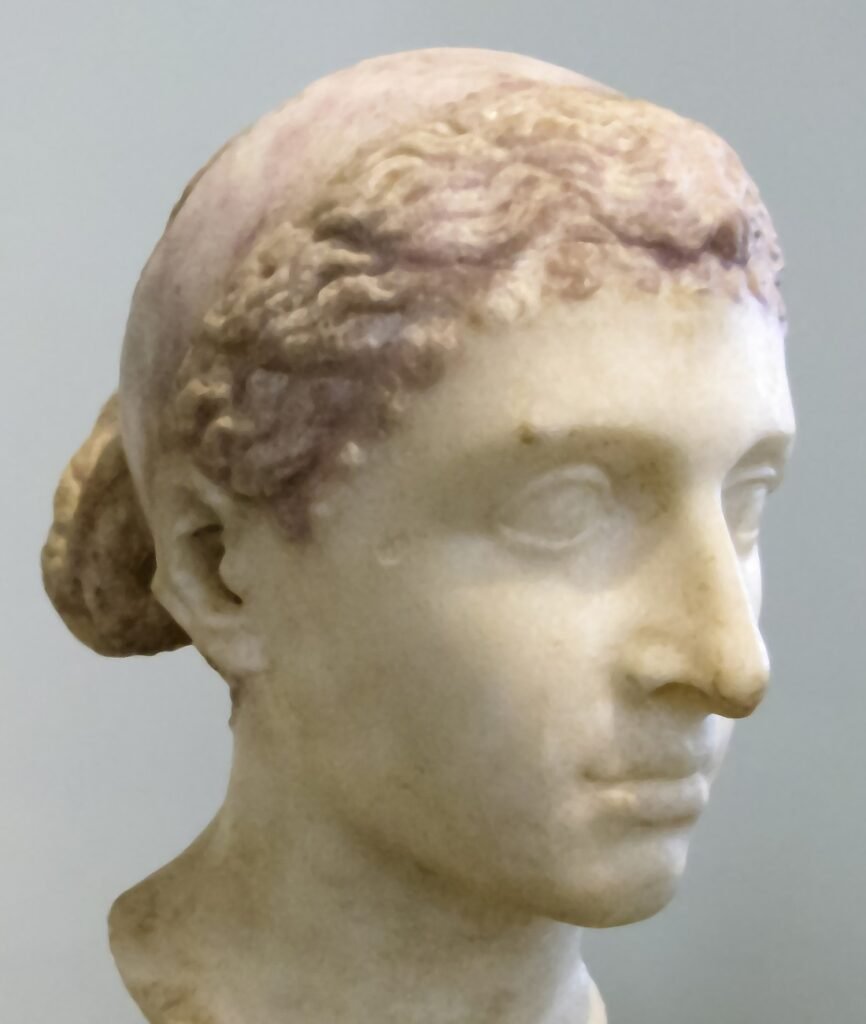
Cleopatra VII was the last active ruler of Ptolemaic Egypt, a queen whose story unfolded at the moment when the ancient Mediterranean was being transformed by the rise of Rome. She came to the throne in 51 BC, survived civil war and Roman intervention, formed alliances with Julius Caesar and Mark Antony, and fought to preserve Egypt’s independence.
Her story is often reduced to romance, beauty, or tragedy. The historical Cleopatra was far more complex: a multilingual ruler, diplomat, religious figure, political strategist, and monarch who understood that Egypt’s survival depended on navigating the most powerful state of the ancient world.
For travelers, Cleopatra’s story is not confined to books. It can still be traced through Alexandria, the temples of Upper Egypt, the reliefs of Dendera, and the wider landscape of Ptolemaic Egypt.
Who Was Cleopatra VII?
Cleopatra VII Philopator belonged to the Ptolemaic dynasty, a Macedonian Greek royal family that ruled Egypt after the death of Alexander the Great. She was born in 69 BC and inherited a kingdom that was wealthy but politically vulnerable.
The Ptolemies ruled from Alexandria, one of the ancient world’s great cities. Greek culture dominated the royal court, while Egyptian religious traditions remained central to the wider population. Cleopatra understood that ruling Egypt successfully required her to speak to both worlds.
Ancient evidence indicates that Cleopatra was the first Ptolemaic ruler known to have learned the Egyptian language. She also knew several other languages, allowing her to communicate more directly with different peoples and political partners.
A Greek Queen Who Ruled Egypt
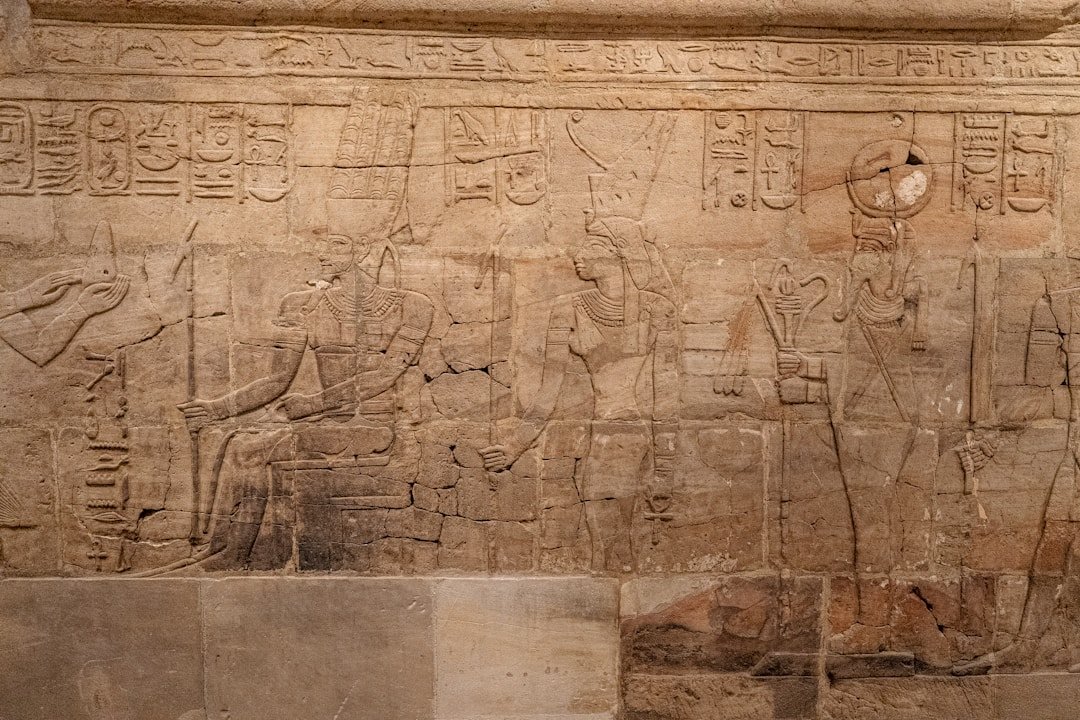
Cleopatra was Macedonian Greek by dynasty, but she deliberately presented herself as an Egyptian ruler. Temple reliefs show her in traditional royal forms, participating in the religious language of Egyptian kingship.
At Dendera, Cleopatra and her son Caesarion appear in monumental reliefs connected with the temple of Hathor. These images are especially valuable for modern visitors because they show how a Ptolemaic queen could be represented within the visual traditions established by pharaohs thousands of years earlier.

Cleopatra’s Rise to the Throne
Cleopatra became queen in 51 BC after the death of her father, Ptolemy XII Auletes. Ptolemaic tradition required her to rule alongside a male member of the royal family, so she initially shared the throne with her younger brother Ptolemy XIII.
The arrangement quickly became unstable. Rival court factions competed for influence, and Cleopatra was eventually forced from Alexandria. She gathered support and prepared to reclaim the throne while Roman politics became increasingly important to Egypt’s future.
Cleopatra and Julius Caesar
In 48 BC, Julius Caesar arrived in Alexandria while pursuing Pompey during the Roman civil war. Cleopatra saw an opportunity to recover her position.
The famous story that she was secretly brought to Caesar in a rolled carpet or bedding is recorded by ancient writers, but the larger historical point is more important: Cleopatra successfully established a political alliance with the most powerful Roman leader of her time.
After Caesar’s victory in Alexandria, Cleopatra was restored to power. Their relationship became personal as well as political, and Cleopatra gave birth to a son, Ptolemy XV Caesarion.
Caesarion became central to Cleopatra’s political strategy. His connection to Caesar gave Cleopatra a potential link to Roman power while reinforcing the Ptolemaic succession.
Cleopatra’s Egypt and the Struggle for Independence
Cleopatra did not control a weak or insignificant kingdom. Egypt remained one of the wealthiest states of the Mediterranean, supported by the Nile, fertile agricultural land, international trade, and the strategic importance of Alexandria.
But Rome’s influence was expanding rapidly. Cleopatra therefore had to balance diplomacy, military resources, grain production, religion, and royal legitimacy. Her survival as queen depended on decisions made not only in Egypt but also in Rome.
Cleopatra and Mark Antony
After Julius Caesar was assassinated in 44 BC, the Roman world entered another period of civil war. Mark Antony became one of the dominant figures in the eastern Mediterranean.
Cleopatra met Antony at Tarsus in 41 BC. Their alliance became both personal and political. Antony needed Egyptian resources and support in the East; Cleopatra needed a powerful Roman partner capable of protecting Egypt’s position.
They had three children together, and their relationship became increasingly visible through royal ceremonies, coinage, and political symbolism.
The Battle of Actium
The final crisis came when Octavian, Caesar’s adopted heir and future emperor Augustus, turned Roman opinion against Antony and Cleopatra.
Roman propaganda portrayed Cleopatra as a dangerous foreign influence. The conflict culminated at the Battle of Actium in 31 BC, where the forces of Octavian defeated those of Antony and Cleopatra.
After Actium, the survival of an independent Ptolemaic kingdom became increasingly unlikely. Octavian invaded Egypt the following year.
How Did Cleopatra Die?
Cleopatra died in August 30 BC. Ancient writers give different accounts of her death, with the story of an asp becoming the most famous version. The exact method, however, cannot be established with certainty from the surviving evidence.
Her death had enormous political consequences. Antony was dead, Caesarion was killed, and Egypt was absorbed into the Roman Empire as a province.
What Happened to Cleopatra’s Children?
Cleopatra’s son Caesarion was executed after Octavian’s victory. Her three children with Mark Antony were taken to Rome and raised in the household of Octavian’s family.
The fate of her children marked the end of the Ptolemaic royal line as an independent ruling house in Egypt.
What Did Cleopatra Really Look Like?
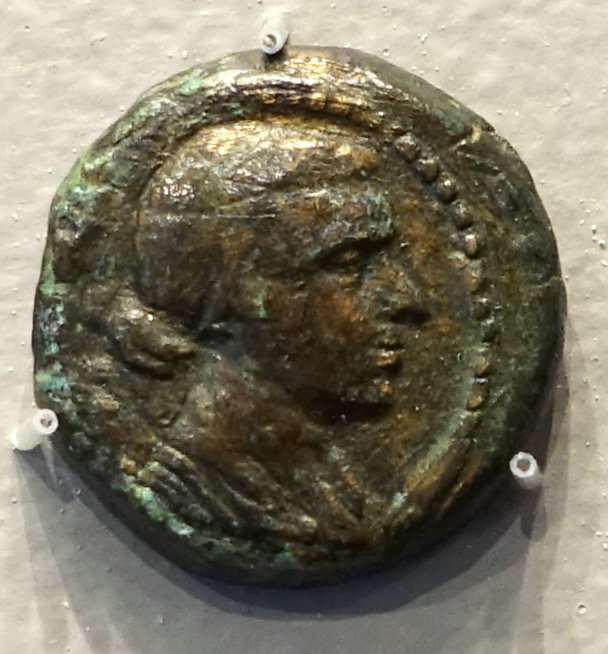
Modern ideas about Cleopatra often come from later paintings, films, and popular culture. Ancient coins and surviving sculpture provide a more direct connection to her appearance, although royal portraiture was designed to communicate status as much as individual likeness.
Was Cleopatra Really Beautiful?
Ancient writers did not all describe Cleopatra primarily through physical beauty. Her influence was associated with intelligence, conversation, personality, education, and political presence. Her historical importance does not depend on whether later generations considered her beautiful.
Cleopatra at Dendera
One of the most rewarding places to connect Cleopatra with ancient Egyptian temple culture is Dendera. The Temple of Hathor contains reliefs of Cleopatra and Caesarion presented within traditional Egyptian royal imagery.
Dendera is also an excellent destination for travelers exploring the history of Egypt beyond Luxor and Cairo. Seeing Cleopatra’s image in an actual temple landscape transforms the story from something read on a screen into something you can experience in person.
Alexandria and Cleopatra’s Lost World
Alexandria was Cleopatra’s capital and the center of Ptolemaic political life. Much of the ancient city now lies beneath the modern city or the Mediterranean, which is one reason Cleopatra’s Alexandria remains surrounded by mystery.
The city’s history can be explored through museums, archaeological remains, the Mediterranean waterfront, and the wider story of the Ptolemaic dynasty.
The Lost Tomb of Cleopatra
Cleopatra’s tomb has never been conclusively identified. Ancient sources indicate that she and Mark Antony were buried together, but the exact location remains unknown.
Archaeologists continue to investigate possible clues, including sites associated with the Ptolemaic period. The search has become one of Egyptology’s enduring archaeological mysteries.
Why Cleopatra Still Matters
Cleopatra’s significance comes from more than her famous relationships. She ruled at a critical turning point and attempted to preserve Egypt’s independence while Rome was becoming the dominant power in the Mediterranean.
She used language, religion, diplomacy, economic resources, royal imagery, and personal alliances as instruments of government. Her reign also shows how the ancient Egyptian tradition of kingship continued into the Ptolemaic period before Egypt became a Roman province.
Visiting Cleopatra’s Egypt Today
Travelers interested in Cleopatra can build an itinerary around several different parts of Egypt. Alexandria connects directly with the Ptolemaic capital. Dendera preserves some of the most important surviving images of Cleopatra and Caesarion. Luxor provides the broader temple landscape that helps explain how Egyptian royal traditions continued across centuries.
If you are planning a longer Egypt trip, staying in Luxor gives you time to explore the temples, west bank monuments, Valley of the Kings, and surrounding archaeological sites without rushing from one attraction to another.
Plan Your Egypt Journey
Want to experience the places connected with Cleopatra and the ancient Egyptian world in person?
Explore hotels, villas and apartments in Luxor and across Egypt, then plan your tours, local guide experiences, Nile adventures and hot air balloon flights.
Frequently Asked Questions About Cleopatra VII
Was Cleopatra Egyptian?
Cleopatra belonged to the Macedonian Greek Ptolemaic dynasty. She ruled Egypt and deliberately adopted Egyptian royal and religious traditions.
Did Cleopatra speak Egyptian?
Ancient evidence indicates that Cleopatra learned Egyptian, making her unusual among Ptolemaic rulers.
Who was Cleopatra’s son?
Her son by Julius Caesar was Ptolemy XV Caesarion, whom she associated with her rule in Egypt.
Did Cleopatra marry Mark Antony?
Cleopatra and Mark Antony formed a long-lasting personal and political partnership, although Roman and Egyptian marriage customs were different from modern conventions.
How did Cleopatra die?
Ancient accounts disagree about the precise method. The traditional asp story is famous, but the surviving evidence does not establish the exact circumstances with certainty.
Where is Cleopatra’s tomb?
Its exact location remains unknown. Ancient sources indicate that Cleopatra and Mark Antony were buried together.
Where can I see Cleopatra in Egypt?
Dendera is particularly important because reliefs there depict Cleopatra and Caesarion. Alexandria is also central to understanding the world in which she ruled.
PREMIUM BOOKING
Plan Your Egypt Journey
From comfortable hotels and private stays to unforgettable Luxor experiences, start planning your Egypt adventure.


Egypt Tours
Build a memorable Egypt itinerary around the places you want to see.

Egypt Travel Experiences
Find experiences that turn an Egypt trip into a lasting memory.
Local Egypt Guides
Discover Egypt with local knowledge and deeper historical context.

Villas & Apartments in Luxor
Choose a private stay when you want more space and flexibility.