Akhenaten: The Pharaoh Who Changed Egyptian Religion
For a few extraordinary years in the Eighteenth Dynasty, one Egyptian king tried to reshape the religious world of the Nile Valley. He changed his name, founded a new capital, elevated the Aten and transformed royal art. His revolution did not survive him — but its traces still define one of ancient Egypt’s most fascinating periods.
Akhenaten began his reign as Amenhotep IV, a king within the established New Kingdom tradition. He is generally dated to around 1353–1336 BC. During his reign, the royal court shifted its focus toward the Aten, the visible solar disc, and built a new city called Akhetaten at the site now known as Amarna.
The result was not simply a change in worship. Religion, royal representation, architecture and artistic style were reorganised around the king, his family and the Aten. After Akhenaten died, the experiment was reversed, but modern archaeology has recovered enough evidence to make the Amarna period one of the most distinctive chapters in Egyptian history.
Eighteenth Dynasty, New Kingdom
Usually dated c. 1353–1336 BC
Akhetaten, modern Amarna
From Amenhotep IV to Akhenaten
Amenhotep IV did not begin his reign by immediately abandoning the traditional religious system. Early monuments still show him within the familiar world of Egyptian gods and royal ritual. Over time, however, the Aten became increasingly central to royal ideology.
The king changed his name from Amenhotep — “Amun is satisfied” — to Akhenaten, usually understood as “Effective for the Aten” or a closely related formulation. The change announced a new relationship between king and deity.
Temples and estates associated with the Aten were expanded, while the cult of Amun and other traditional gods was increasingly restricted. The degree and timing of these measures varied across the reign, but by the later years Akhenaten’s program had become a profound break from earlier royal religious practice.
What Was the Aten?
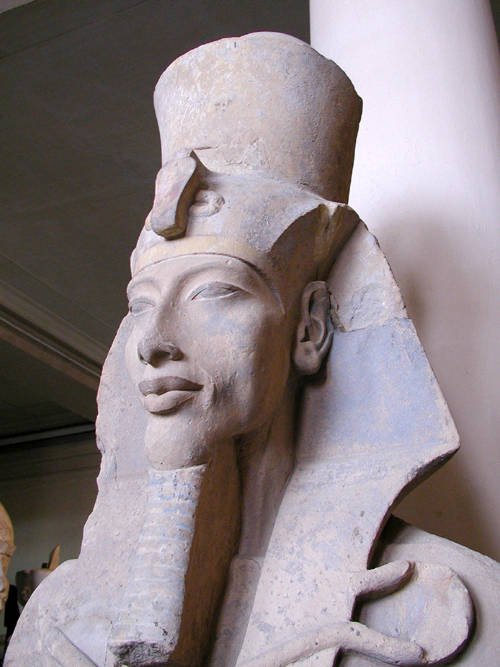
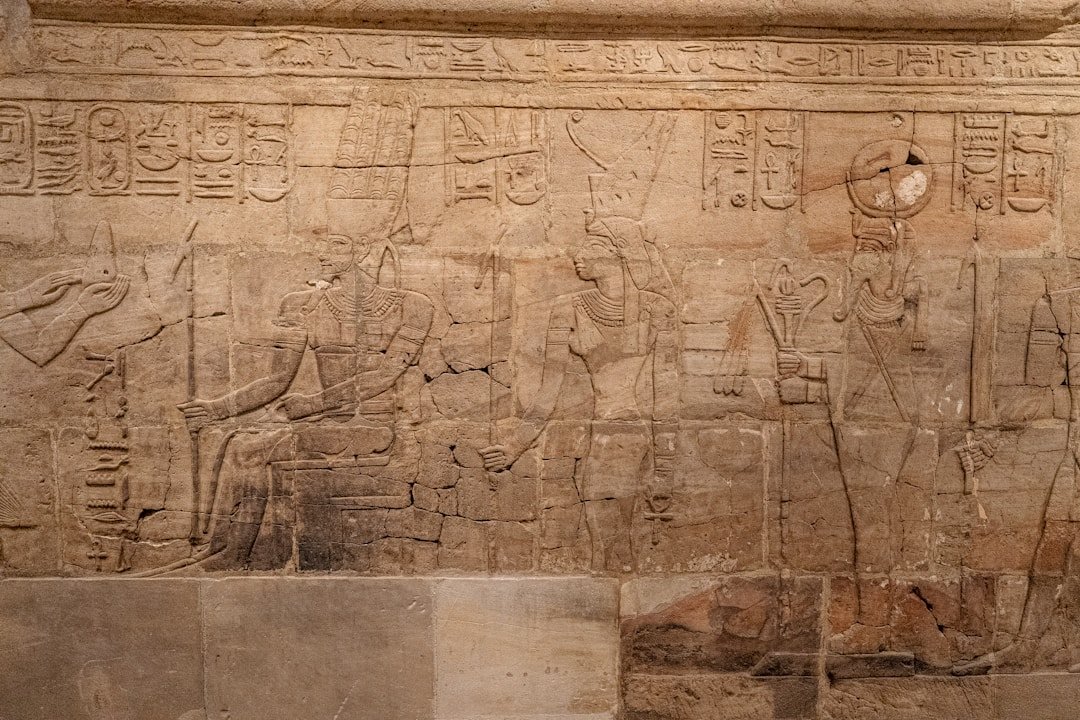
The Aten was represented as a solar disc whose rays ended in hands, sometimes offering the ankh, the sign of life, to the royal family. Unlike the traditional gods, the Aten was not normally represented as a human or animal-headed deity. The royal family occupied a unique position between the Aten and the wider population.
Calling Akhenaten’s system simply “monotheism” can be misleading. Scholars continue to debate whether it should be understood as monotheism, henotheism or a distinctive form of royal solar theology. The evidence clearly shows the elevation of the Aten and suppression of many traditional cults, but modern religious categories do not map neatly onto the ancient system.
Akhenaten and Nefertiti
Queen Nefertiti became one of the most prominent figures of the Amarna period. In reliefs and other representations she appears beside Akhenaten in ways that give her an unusually visible role in royal ritual. The couple are frequently shown beneath the rays of the Aten with their daughters.
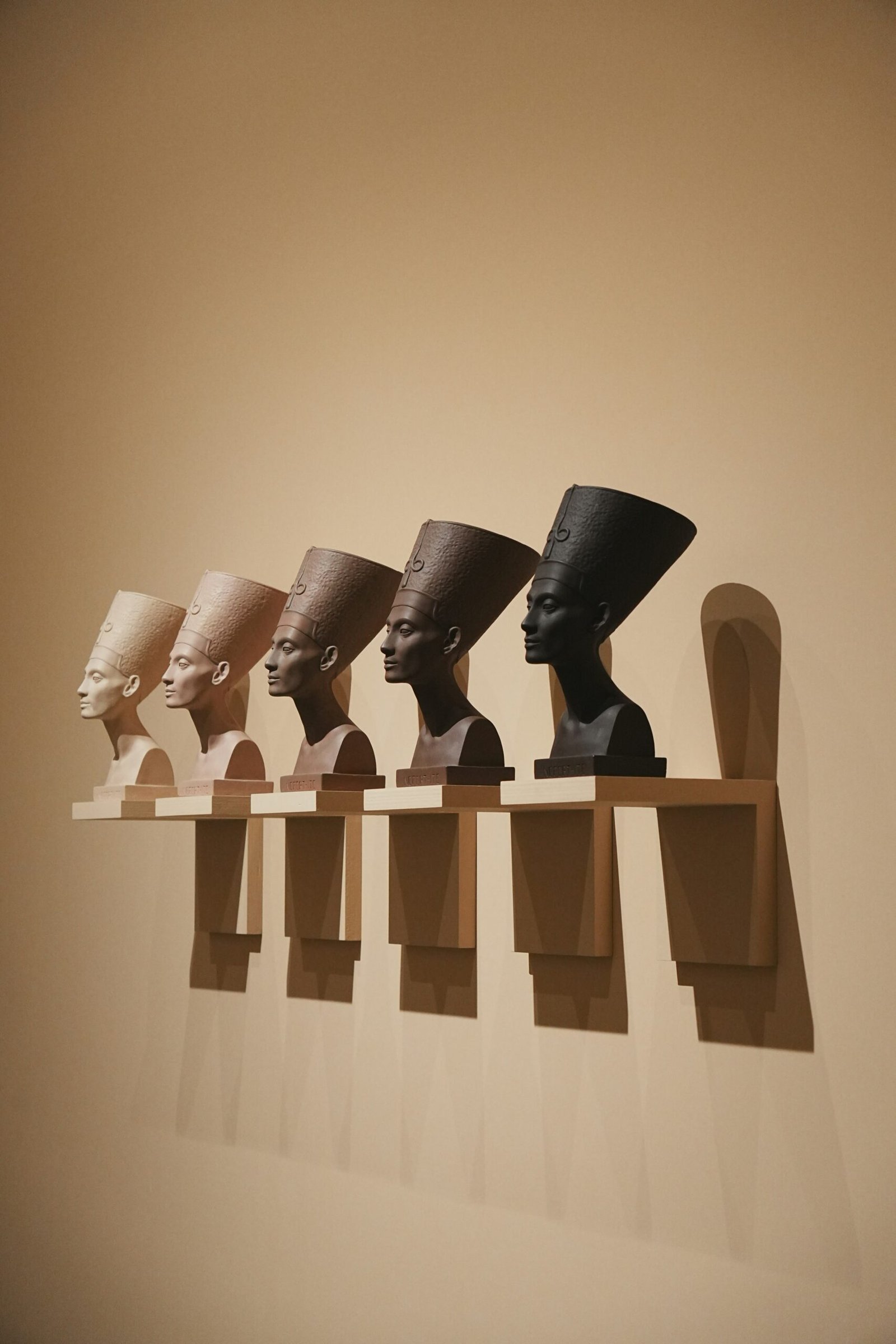
Her prominence has generated many theories about her later role and disappearance from the historical record. Some proposed identifications remain debated, and the evidence does not allow every stage of her later life to be reconstructed with certainty.
Why Did Akhenaten Build Amarna?
Akhenaten founded Akhetaten on previously undeveloped land on the east bank of the Nile, in the region now called Amarna. Boundary stelae marked the limits of the new royal city and recorded the king’s association with the site.
The city was designed around the Aten. Open-air temples allowed sunlight to reach the cult spaces, while royal residences, administrative buildings and elite tombs created an entirely new political and religious centre. The move was also a physical separation from the powerful institutions of older religious centres such as Thebes.
Amarna was not intended to become just another Egyptian city. It was the physical expression of Akhenaten’s religious program, and its rapid construction shows how strongly the king wanted the new order to shape everyday royal life.
Amarna Art: A Revolution in Egyptian Representation
Few changes are as immediately recognisable as the art of the Amarna period. Akhenaten is often shown with a long face, narrow chest, broad hips and a pronounced abdomen. Nefertiti and the royal daughters appear in a related visual style.
Family scenes are especially striking. The king and queen may be shown holding or playing with their children beneath the Aten’s rays. Compared with the formal and timeless conventions of earlier Egyptian royal art, these images create an unusual sense of family intimacy.
Scholars continue to discuss how literally the unusual body forms should be read. They may combine physical observation, theological symbolism and a deliberate royal artistic convention. What is certain is that the style was systematic and closely tied to the new ideology.
What Happened After Akhenaten Died?
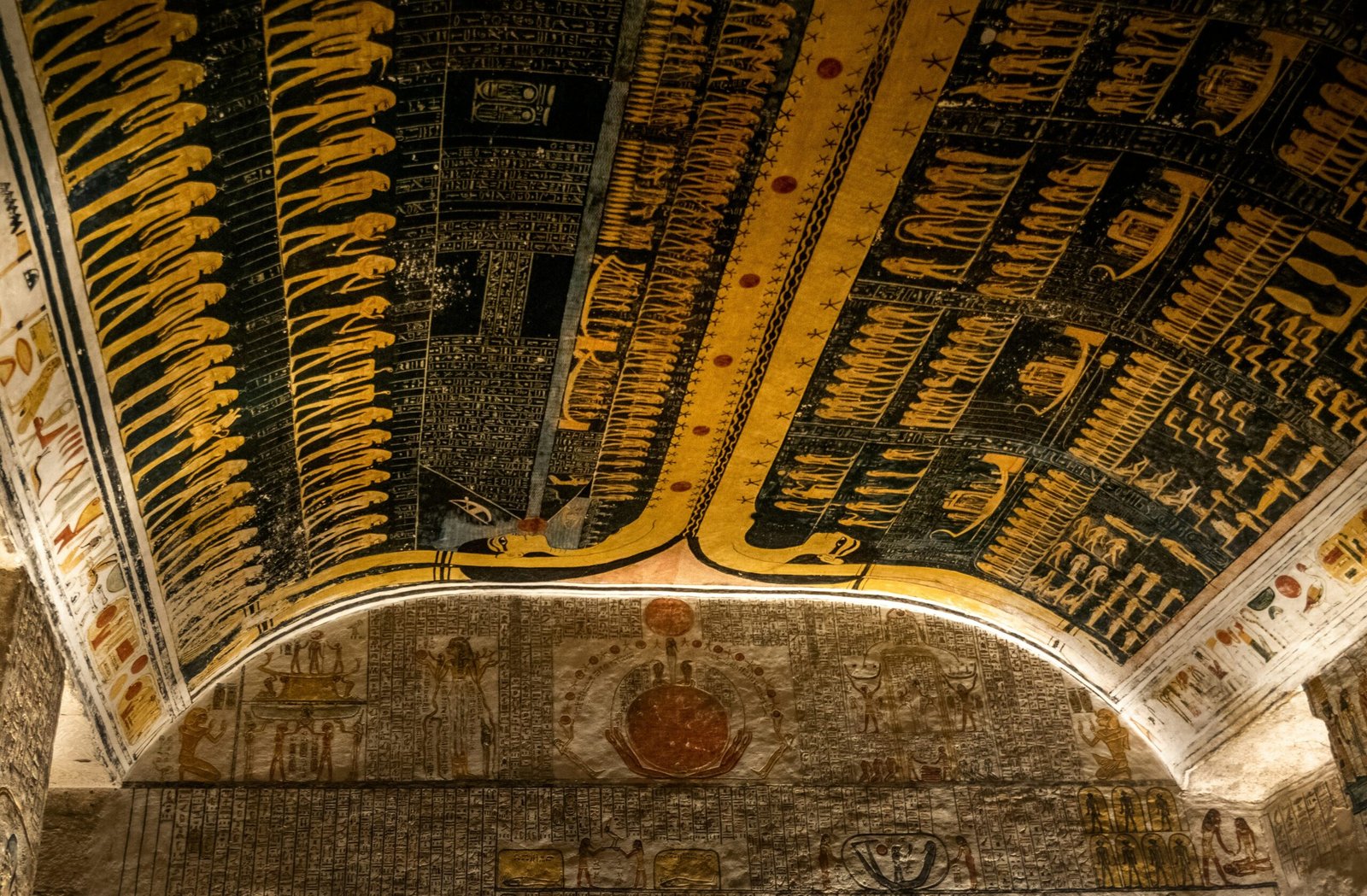
Akhenaten’s religious system did not remain dominant after his death. The royal court left Amarna, and the traditional gods and temples were restored under his successors. Tutankhamun, who came to the throne as a young king, is particularly important in this transition.
Traditional cults regained official support, while references to Akhenaten and the Amarna rulers were removed or dismantled in later royal monuments. Many blocks from Amarna buildings were reused elsewhere. The city itself was abandoned, leaving a remarkable archaeological record beneath the desert.
For a later Egyptian official memory, Akhenaten became an uncomfortable break in the royal sequence. Modern archaeology, however, has made that short period visible again.
Akhenaten and Tutankhamun
Akhenaten’s story cannot be separated from Tutankhamun. The young king inherited a royal family and political landscape shaped by the Amarna experiment, then presided over the restoration of traditional religious practice.
That connection helps explain why Tutankhamun’s reign is so important. His famous tomb preserved objects from a world only a generation removed from Akhenaten, while his restoration inscriptions provide evidence for the return of the older religious order.
Explore more of the Egyptian Pharaohs and the New Kingdom to place Akhenaten and Tutankhamun within the larger history of ancient Egypt.
Can You Visit Amarna Today?
Location: Amarna lies on the east bank of the Nile in Middle Egypt, in modern Minya Governorate.
What you can see: Remains of Akhetaten, boundary stelae, the Great Aten Temple area, royal and private tombs, and other archaeological remains.
Planning: Amarna is less developed for mass tourism than Luxor or Giza. Distances between archaeological areas are significant, so a planned visit is important.
Best approach: Combine Amarna with a knowledgeable local guide and allow enough time for the archaeological landscape rather than treating it as a quick stop.
For travelers interested in Egypt beyond the most famous monuments, Amarna offers something unusual: a city built around a short-lived royal experiment. The desert preserves the remains of a capital that was powerful for only a few years but transformed how historians understand Akhenaten’s reign.
Why Akhenaten Still Matters
Akhenaten’s revolution was brief, but it touched almost every part of royal culture: religion, art, architecture, political geography and the representation of the royal family. Its failure also reveals how strongly Egypt’s traditional institutions and religious traditions were embedded in society.
Today, the Amarna period remains compelling precisely because it resists simple labels. Akhenaten was neither simply a modern-style monotheist nor merely another pharaoh following an ordinary religious policy. He created a distinctive royal theology whose traces can still be seen in statues, reliefs, city ruins and the objects associated with his successors.
The Aten revolution lasted only a generation. The questions it created have lasted much longer — making Akhenaten one of the most intriguing pharaohs of the New Kingdom.
Frequently Asked Questions About Akhenaten
Who was Akhenaten?
Akhenaten was an Eighteenth Dynasty pharaoh of the New Kingdom who elevated the Aten and founded the new capital of Akhetaten at modern Amarna.
Was Akhenaten the first monotheist?
He elevated the Aten above the traditional gods and suppressed many older cults, but whether his system should be called monotheism remains debated among scholars.
What was the Aten?
The Aten was represented as the visible solar disc, with rays ending in hands. Under Akhenaten it became the central focus of royal religion.
Why did Akhenaten build Amarna?
Akhenaten founded Akhetaten as a new royal capital dedicated to the Aten, creating a physical centre for his religious and political program.
What happened to Nefertiti?
Nefertiti was highly prominent during much of Akhenaten’s reign, but the evidence for her final years and exact fate is incomplete and remains debated.
What happened to Akhenaten after his death?
His religious program was reversed, the court left Amarna, traditional cults were restored and many Amarna monuments were dismantled or reused.
Can tourists visit Amarna?
Yes. The archaeological site can be visited, including parts of the ancient city, boundary stelae and tomb areas, although it is less developed for tourism than Luxor and Giza.
PREMIUM BOOKING
Plan Your Egypt Journey
From comfortable stays and private homes to Luxor experiences, guides and unforgettable adventures, plan the next part of your Egypt journey.

Villas & Apartments in Luxor
Choose a private stay for longer visits to Luxor and the West Bank.
Local Egypt Guides
Make the stories of Egypt easier to understand with local expertise.
Egypt Hotels
Find stays across Egypt and build your trip around the places you want to explore.

Egypt Travel Experiences
Add memorable local experiences beyond the major monuments.
Luxor Tours
Explore temples, tombs and ancient landscapes with focused Luxor tours.
Private Egypt Tours
Travel at your own pace with private experiences designed around your journey.